



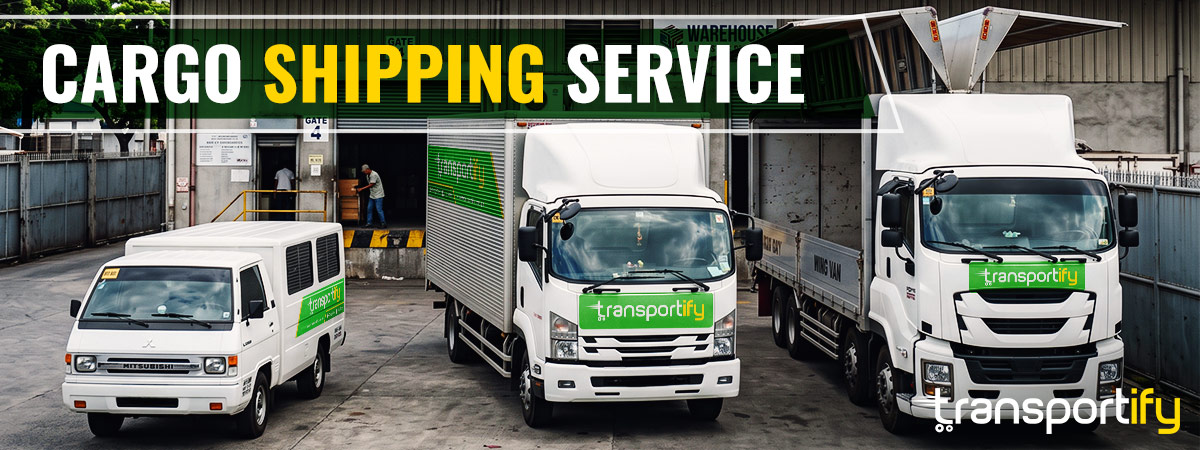
Cargo shipping in the Philippines moves commercial goods, bulk freight, and business inventory between provinces and islands. Cargo shipment services in the Philippines use a combination of land, air, and sea transport. Domestic cargo shipping logistics rely on a multi-modal approach because the Philippines is composed of over 7,600 islands that are not fully connected by land-base roads .
Cargo shipment services are available as Less than Truckload (LTL) for land-based shipments and Less than Container Load (LCL) for sea freight. LTL and LCL allow shippers to send goods without paying for a full vehicle or vessel. Both LTL and LCL shipments are picked up and delivered door to door. Door-to-door coverage means that cargo is picked up directly from the shipper’s address and delivered to the recipient’s location without requiring either party to drop off or collect at a terminal.
What is Cargo Shipping in the Philippines?
Cargo shipping in the Philippines is a freight transport service that moves commercial goods of varying sizes and weights across domestic routes using land, sea, or air carriers. Cargo shipping differs from parcel delivery in that it handles bulk loads, and heavy items that exceed standard courier limits. Businesses use cargo shipping to move inventory between warehouses, retailers, and customers on different islands.
The domestic cargo shipping industry serves a critical economic function because the country’s island geography makes road-only distribution impossible for inter-provincial trade. Businesses shipping from Luzon to Visayas or Mindanao destinations must route their cargo through a combination of land and sea transport. Fast-moving consumer goods (FMCG), manufacturing, retail, construction, and agricultural sectors regularly use cargo shipping because their volumes exceed standard courier limits.
What does LTL mean in Cargo Shipping?
Less Than Truckload (LTL) in cargo shipping is a shipment method where a shipper’s freight does not occupy the full capacity of a truck. LTL shippers only pay for the space their cargo occupies in the truck. The remaining truck space is filled with goods from other shippers. All consignments are consolidated into one vehicle heading along a shared route.
LTL is a cost-effective model for businesses that need to move cargo regularly but do not generate enough volume to justify booking a full truck for every shipment. An LTL shipment ranges from one to six pallets, with per-pallet weights generally between 90 and 2,270 kilograms depending on the carrier and vehicle type. LTL cargo is unloaded and reloaded at transfer terminals. The extra handling in LTL is the trade-off for a lower price than FTL. Transportify Philippines offers LTL cargo shipping as part of its platform, allowing businesses to book space on a shared truck without committing to the full vehicle rate.
What does LCL mean in Cargo Shipping?
Less than Container Load (LCL) in cargo shipping means a sea freight shipment that doesn’t fill an entire shipping container. LCL goods are consolidated with cargo from other shippers inside a shared container. LCL shippers pay only for the cubic meters or weight their goods occupy in the container.
LCL is the sea-freight equivalent of LTL and is widely used in the Philippines for inter-island cargo moving between major ports like Manila, Cebu, Davao, Iloilo, and Cagayan de Oro. LCL is practical for small businesses that ship island-to-island regularly but don’t have the volume to fill a Full Container Load (FCL). Transportify offers LCL cargo shipping to give Philippine businesses an interisland option for sea freight without the minimum volume requirement of a full container.
What is Difference between Cargo Shipping and Courier Delivery?
Cargo shipping and courier delivery differ primarily in shipment scale, infrastructure, and coverage reach. Cargo shipping handles bulk, or heavy freight across land, sea, and air routes, including remote island provinces. Courier delivery prioritizes speed and convenience for smaller, lighter packages, typically within urban or semi-urban areas.
| Factor | Cargo Shipping | Courier Delivery |
|---|---|---|
| Cargo Size and Weight | 50 kg and above (pallets and bulk loads) | Under 50 kg (small parcels and documents) |
| Transit time | 1 to 5 days (land) or 2 to 7 days (sea) | Same-day to 3 days |
| Coverage (island provinces) | Broad interisland coverage | Mainly urban and semi-urban areas |
| Cost model | Charged by weight, volume, or space used (LTL/LCL) | Fixed rates by weight tier and destination zone |
| Item types | Industrial goods, appliances, bulk inventory, machinery | Parcels, documents, e-commerce packages |
| Tracking method | Real-time tracking via logistics app or fleet system | Tracking via courier app or waybill number |
Use cargo shipping for bulk or inter-island loads, and courier delivery for single parcels that need to arrive fast. Courier delivery remains the faster and simpler option for individual consumer parcels.
What Modes of Transport are used for Cargo Shipping in the Philippines?
Cargo shipping in the Philippines uses a combination of land, sea, and air transport depending on the distance, urgency, and nature of the goods being moved.
- Land (Truck Freight): Trucks ranging from closed vans to 10-wheelers move cargo across intra-island routes, handle port pickups, and complete last-mile delivery to the consignee’s address. Most multi-modal shipments start and end on a truck
- Sea (Interisland Vessel Freight): Roll-on/roll-off (RoRo) ferries, cargo vessels, and container ships connect the country’s major port cities. Sea freight is the dominant mode for inter-island shipments.
- Air (Air Cargo): Aircraft move time-sensitive or high-value cargo to provinces not easily served by sea or road, including remote island destinations in the Visayas and Mindanao. Air cargo is the fastest but most expensive of the three modes.
Businesses that work with multi-modal freight providers reduce handover delays and maintain consistent tracking visibility across the entire shipment journey from origin to final destination.
How Does Transportify Cargo Shipping Service Work?
Transportify cargo shipping service works differently depending on whether a business is booking a FTL service or sending cargo through the LTL or LCL model.
The FTL booking process is self-managed through the Transportify app or web platform. A shipper selects a vehicle type suited to their cargo volume, enters pickup and drop-off addresses, and confirms the booking. The platform then matches the booking to the nearest available qualified driver.
The LTL and LCL shipping process starts with a shipper filling out the cargo inquiry form on the Transportify website or contacting the cargo team directly at cargo@transportify.com.ph or +639 177 027 397. Transportify acts as the trusted middleman. The cargo team coordinates with its freight forwarding partners to determine the best transport mode for the shipment. Once the transport arrangement is confirmed, Transportify arranges door-to-door delivery from the pickup address to the final destination.
Transportify’s FTL, LTL and LCL services share the same core advantage. The service operates 24 hours a day, seven days a week, including public holidays. Transportify’s 24/7 service gives businesses the flexibility to move cargo on time-sensitive schedules without being limited by standard business hours.
What Cargo Shipping Routes does Transportify cover?
Transportify covers cargo shipping routes across all three major island groups of the Philippines, connecting Metro Manila and provincial origins to destinations across Luzon, Visayas, and Mindanao.
- Luzon: Metro Manila, Cavite, Bulacan, Laguna, Rizal, Pampanga, Batangas, Nueva Ecija, Tarlac, Benguet, Pangasinan, Isabela, Quezon, Bataan, Zambales, Camarines Sur (Naga), La Union, Albay, Ilocos, Cagayan, Camarines Norte
- Visayas: Cebu, Iloilo, Negros Occidental (Bacolod), Bohol, Capiz, Leyte (Tacloban)
- Mindanao: Davao, Misamis Oriental (Cagayan de Oro), Agusan, South Cotabato (General Santos), Bukidnon, Sarangani, Zamboanga
The list above is comprehensive but not limited to these provinces, as Transportify continues to expand its coverage. Businesses outside the listed areas can use Transportify’s address checker to check route availability for their specific origin and destination.
How to Book Cargo Shipping Service with Transportify?
Booking cargo shipping with Transportify follows two paths depending on shipment size. FTL bookings are self-managed through the app in a few steps, while LTL and LCL bookings are handled through a coordinated inquiry process with the Transportify cargo team:
- Determine Your Shipment Type: Assess your cargo volume to decide whether you need a full vehicle (FTL) or a shared space arrangement (LTL or LCL).
- Access the Right Booking Channel: For FTL, open the Transportify mobile app, or access the web app at transportify.com.ph. For LTL and LCL, fill out the cargo inquiry form on the website or contact the cargo team directly at cargo@transportify.com.ph or +639 177 027 397.
- Select Vehicle Type or Freight Mode: For FTL bookings, choose the vehicle that matches your cargo size and weight. For LTL and LCL, the Transportify cargo team will recommend the most suitable transport mode based on your shipment details.
- Enter Pickup and Delivery Addresses: Input the cargo origin and destination addresses. FTL bookings through the app support up to 15 additional drop-off points per booking for multi-stop deliveries.
- Choose Timing: For FTL, select immediate pickup or schedule the booking up to two weeks in advance. For LTL and LCL, the cargo team will coordinate a pickup schedule aligned with your shipment readiness.
- Add Extra Services: For FTL bookings, select optional add-ons such as extra helpers for loading and unloading.
- Confirm and Monitor: For FTL, review the fare estimate, confirm the booking, and track the driver in real time through the app. For LTL and LCL, the Transportify cargo team will provide shipment updates and coordinate delivery to the final destination.
All Transportify cargo shipments follow a door-to-door model where cargo is collected from the shipper’s address and delivered directly to the recipient. Businesses that regularly exceed LTL thresholds will find that moving to FTL through the app delivers faster booking confirmation and a direct route without intermediate handling stops.
How Is Cargo Shipment Tracked With Transportify?
Cargo shipment is tracked with Transportify through a built-in real-time GPS tracking system available directly in the Transportify app. The tracking feature shows the live location of the driver and provides an estimated time of arrival (ETA) that updates dynamically at each delivery destination.
Shippers can monitor their cargo from any device, including smartphone, tablet, or computer, throughout the entire journey from pickup to final delivery. The app also sends status notifications so senders always know where their shipment is at every stage of the route. For businesses managing multiple deliveries, the tracking system covers all active FTL bookings in one dashboard.
For LTL and LCL cargo shipments coordinated through the Transportify cargo team, shippers can track their order status separately by entering their Order ID on the cargo tracking page. LTL and LCL shippers are given visibility over their shipment progress without needing to contact the cargo team for manual updates.
How does Transportify work for Fleet Owners?
Transportify works for fleet owners by providing a dedicated fleet partner program that plugs existing trucks and drivers directly into the Transportify booking network. Transportify eliminates the need for fleet owners to source their own clients or manage their own sales and marketing.
Fleet owners with two or more trucks or delivery vans can enroll by emailing their application details to fleetpartner@transportify.com.ph. Transportify’s onboarding team contacts the applicant within 48 hours and provides the necessary instructions for activation.
Once enrolled, fleet owners access a fleet management software that lets a dispatcher receive bookings and assign them to specific drivers and vehicles. The software also includes a chat function to communicate directly with drivers through their driver app and export booking data for accounting and reconciliation.
Does Transportify support Cash on Delivery (COD) transactions?
Yes, Transportify supports Cash on Delivery (COD) transactions as part of its cargo shipping and delivery service. COD is available to Corporate Account holders as a recipient-side collection service. Corporate Account COD is where the assigned driver partner collects the payment in cash from the recipient at the time of delivery and remits it back to the sender through Transportify’s COD processing system. Cash collected is remitted by Transportify to the client’s registered bank account within 1 to 3 banking days after booking completion. Corporate Account holders also receive Proof of Delivery (POD) which are signed delivery receipts that are returned to the sender as documentation of successful cash collection at each drop-off point.
What Items can be Shipped through Transportify Cargo Shipping Service?
Transportify’s cargo shipping service accepts most types of commercial and household goods, including dry goods, packaged products, appliances, furniture, construction materials, and general merchandise. The platform is designed to handle a wide range of cargo types across its full vehicle lineup.
- Commercial Goods: Dry goods, retail merchandise, packaged food products, and fast-moving consumer goods are among the most commonly shipped cargo types on Transportify.
- Appliances and Electronics: Refrigerators, washing machines, televisions, and other household appliances are regularly transported using Transportify’s closed vans and larger truck options.
- Construction Materials: Pipes, lumber, steel bars, and other building materials that require open-bed transport are accommodated by Transportify’s open truck and large truck fleet.
- Food and Perishables: Temperature-sensitive food items and perishable goods can be transported on Transportify using air-conditioned vehicles or if appropriate packaging is provided by the customer.
- Business Inventory and Bulk Stock: Palletized goods, warehouse inventory, and high-volume retail stock are handled through FTL or LTL arrangements depending on shipment volume.
- Personal and Household Items: Furniture, balikbayan boxes, and personal belongings for house moves are accepted. Transportify is a practical option for lipat bahay shipments.
Transportify’s cargo eligibility covers the vast majority of what Philippine businesses and individuals regularly need to move. Customers who are unsure whether their specific cargo qualifies can reach Transportify’s 24/7 customer support team for guidance before booking.
What are Weight and Size Limits for Cargo Shipping?
The weight and size limits for cargo shipping are dependent on the carrier’s available services and operational capacity. For Transportify’s LTL and LCL cargo shipments, there are no fixed weight or size limits. The appropriate transport arrangement is determined through direct discussion with a Transportify representative, who assesses the shipment and recommends the most suitable freight option based on volume, weight, and destination. For FTL bookings made through the app, limits are defined by the vehicle type selected.
- Sedan: Up to 200 kg with cargo space of 3.5 by 2 by 2.5 ft
- MPV/SUV: Up to 300 kg with cargo space of 5 by 3.2 by 2.8 ft
- Light Van: Up to 600 kg with cargo space of 5.5 by 3.8 by 3.8 ft
- Small Pickup: Up to 1,000 kg with cargo space of 5 by 5 ft (open)
- L300/Van: Up to 1,000 kg with cargo space of 8 by 4.5 by 4.5 ft
- Closed Van: 2,000 kg to 5,000 kg with cargo space of 10 to 14 by 6 by 6 ft
- Open Truck: 2,000 kg to 7,000 kg with cargo space up to 21 ft in length
- 6W FWD Truck: Up to 7,000 kg with cargo space of 18 by 6 by 7 ft
- Wing Van: 12,000 kg to 28,000 kg with cargo space of 32 to 40 by 7.8 by 7.8 ft
- Canopy Multicab: Up to 600 kg with cargo space up to 6 by 4 by 3.6 ft. Available only in Visayas and Mindanao
- Bongo Truck: Up to 1,300 kg with cargo space of up to 9 ft in length, 5 ft in width and open bed. Available only in Visayas and Mindanao
Transportify’s wide fleet options for FTL and limitless LTL and LCL size limits addresses a wide range of logistics needs in the Philippines.
What Items are Not Allowed in Cargo Shipping?
Transportify prohibits a certain items from its cargo shipping service to protect driver partners, other customers’ shipments, and the integrity of the delivery vehicles. Transportify’s restrictions align with Philippine laws and regulations on logistics, public safety, and biodiversity conservation.
- Live animals: Livestock, pets and other animals are not supported by Transportify’s delivery options.
- Explosives: Bombs, dynamite and other explosives are prohibited to prevent unexpected incidents during transit that can damage the delivery vehicles and endanger the driver and other cargo on board.
- Gases and fuels: LPG tanks, spare gas cans, and other flammable fuels can ignite in transit.
- Environmental and human waste: Garbage, sewage, and similar waste materials are prohibited because of hygiene and contamination risks to delivery vehicles.
- Biological substances: Human biological samples such as urine, blood, and saliva are not accepted due to the contamination risk they present even in sealed containers.
- Human remains: Ashes, bones, and corpses require specialized authority and expertise that Transportify does not provide.
- Illegal drugs: Cocaine, methamphetamine, and other controlled substances are strictly refused in compliance with Philippine law.
- Other contaminants: Soil, sand, coral samples, and bacteria or fungi cultures in Petri dishes are prohibited because they can contaminate vehicles and endanger drivers.
- Protected wildlife: Live or dead specimens of protected Philippine species are not accepted in compliance with DENR regulations.
- Precious metals and semi-precious stones (bulk): Raw bullion and semi-precious stones in bulk quantities are prohibited.
- Cash and legal tender: Local and foreign currency cannot be shipped using Transportify.
- Counterfeit goods: Fake merchandise including bags, shoes, cosmetics, and clothing are not permitted because their distribution violates Philippine law.
- Unregistered medicine: Counterfeit or unregistered pharmaceutical products are prohibited because they cannot be legally distributed in the Philippines.
Shippers are advised to contact Transportify’s customer support before booking if they are unsure if their cargo falls under the prohibited items list.
Can Personal Items be sent through Cargo Shipping in the Philippines?
Yes, personal items can be sent through cargo shipping in the Philippines. Transportify accommodates personal and household shipments. Furniture, personal effects, balikbayan boxes, and household belongings for lipat bahay moves are all accepted cargo types across Transportify’s vehicle fleet. The only personal items that cannot be shipped are those that fall under the prohibited items list, such as live pets, flammable gases, biological samples, and cash.
How much does Cargo Shipping Cost in the Philippines?
Cargo shipping costs in the Philippines vary based on the service type, vehicle size, and route. For Transportify FTL bookings, base prices start at PHP 220 for a Sedan in Metro Manila and scale up to PHP 7,000 for a 10-Wheeler Wing Van on the same origin zone. Visayas and Mindanao rates start at PHP 140 for a Sedan and PHP 6,500 for a Wing Van. Transportify’s LTL and LCL cargo shipping can start as low as PHP 400 per shipment. The final price depends on the cargo’s weight, dimensions, and destination. The final price is determined through a direct discussion between the shipper and a Transportify representative.
What Factors affect Cargo Shipping Rates in the Philippines?
Cargo shipping rates in the Philippines depend on multiple variables that interact to determine the final cost. Understanding each factor helps shippers plan budgets and avoid surprises at checkout.
- Cargo Weight and Volume: Heavier and bulkier shipments require more vehicle capacity and fuel, which drives up the base rate.
- Pickup and Delivery Location: Shipments across longer distances increase fuel consumption and transit time which are increases the shipping rate.
- Transport Mode Selected: Land freight is generally the most affordable option for domestic routes, while air freight is the most expensive mode. Sea freight sits between the land and air freight in terms of cost and transit time.
- Cargo Type: Fragile, oversized, or hazardous goods require specialized handling, reinforced packaging, or dedicated vehicle types, all of which add to the total shipping cost.
- Seasonality: Peak shipping periods, including the Christmas season and major Philippine holidays, drive higher demand for cargo vehicles, which can push rates upward when supply is constrained.
- Fuel Surcharges: Fluctuations in fuel prices directly affect freight rates across all transport modes, and surcharges are periodically adjusted to reflect current fuel costs at the time of booking.
- Island and Remote Delivery Surcharge: Deliveries to island provinces or areas with limited road access typically carry an additional surcharge to cover the extra transport legs and handling required to reach those destinations.
Shippers who consolidate cargo volume and choose the appropriate transport mode will generally achieve the most favorable rates. For LTL and LCL bookings, discussing shipment details directly with a Transportify representative gives shippers a more accurate cost picture before committing.
How does Transportify Pricing compare to Booking Full Vehicle?
Transportify offers two structurally different pricing models, and the right choice depends on how much cargo a shipper is moving. Cargo Shipping through LTL or LCL lets shippers pay only for the space they use. Transportify FTL bookings dedicate an entire vehicle to one shipper’s load.
| Factor | Cargo Shipping | Courier Delivery |
|---|---|---|
| Minimum cargo size | No minimum | No minimum but constrained to maximum capacity of delivery vehicle |
| Cost model | Pay for space used only | Fixed rate for entire vehicle |
| Flexibility | High due to shared costs with other shippers | Low due to full cost regardless of fill level |
| Transit time | Longer due to consolidated routing | Faster due to direct origin-to-destination |
| Best for | SMEs with smaller or irregular cargo volumes | Businesses with large, time-sensitive shipments |
LTL/LCL is the more cost-efficient choice for businesses that ship regularly but don’t consistently fill a truck. FTL becomes the better value once cargo volume reaches the point where shared consolidation costs more than booking the entire vehicle outright or the shipment is time-sensitive.
Who should use Cargo Shipping Services in the Philippines?
Cargo shipping services in the Philippines are suited to anyone moving goods that exceed the size, weight, or volume limits of standard parcel couriers. Transportify’s cargo shipping service is accessible to individuals, small businesses, and large enterprises alike, with flexible options that scale to match different shipment needs.
- General delivery customers: People relocating homes, sending large personal items to family in the province, or shipping balikbayan boxes benefit from cargo shipping’s ability to handle bulky loads that courier services cannot accommodate.
- Online sellers and e-commerce merchants: Sellers managing high-volume orders or restocking inventory from suppliers need a cost-effective way to move goods in bulk without paying individual parcel rates for every item.
- Small and medium enterprises (SMEs): SMEs that supply retailers, distributors, or end customers regularly benefit from LTL or FTL cargo shipping, which lets them move commercial quantities at affordable prices.
- Retailers and grocery distributors: Supermarkets, convenience store chains, and FMCG distributors use cargo shipping to move palletized goods from distribution centers to store branches across multiple provinces.
- Manufacturers and suppliers: Factories and raw material suppliers use cargo shipping to transport goods from production sites to partner plants, warehouses, or direct customers nationwide.
- Construction companies: Builders and contractors use open trucks and flatbed vehicles for cargo shipping of pipes, lumber, steel bars, and heavy equipment to construction sites.
- Event organizers and exhibit companies: Organizers moving booths, equipment, and display materials between cities use cargo shipping for its door-to-door convenience and vehicle size flexibility.
Cargo shipping is suitable for shippers whose logistics are outside the scope of standard couriers. Cargo shipping is able to reach more provinces and carry heavier loads than standard motorcycle deliveries.
How does Cargo Shipping Benefit Small Businesses in the Philippines?
Cargo shipping benefits small businesses in the Philippines primarily by reducing the total cost of moving goods. SMEs that partner with a third-party cargo shipping provider avoid the overhead of owning, insuring, and maintaining a delivery flee. Transportify’s rates for business cargo are lower than the average market price, which directly lowers the per-unit distribution cost for small businesses shipping to retailers and end customers across provinces.
Cargo shipping gives small businesses logistics flexibility that mirrors what larger corporations have. A small business can book a Sedan for a 200 kg delivery today and a Closed Van for a 2,000 kg distribution through the same app and the same account, without committing to a fixed vehicle contract. This scalability is valuable in the Philippines, where SME order volumes fluctuate with seasonal demand peaks and regional sales cycles.
Cargo shipping through Transportify also gives small businesses access to features that were previously reserved for enterprise logistics teams. Real-time GPS tracking, Cash on Delivery processing, Proof of Delivery documentation, and post-pay invoicing through a corporate account are all available to SMEs at the same service level as large corporate clients. For small business owners managing operations without a dedicated logistics team, these functionalities reduce the time spent coordinating deliveries and following up on payment collection.
What Types of Businesses use Transportify for Cargo Shipping?
Transportify serves a broad range of industries across the Philippines, from businesses moving high volumes of consumer goods to enterprises handling specialized freight. Any business with regular logistics needs can use the platform.
- FMCG and Consumer Goods Companies: Fast-moving consumer goods manufacturers and distributors use Transportify to maintain continuous supply from warehouses to retail shelves, where shipment frequency and volume are both high.
- Food and Beverage Businesses: Restaurants, food manufacturers, and beverage distributors use Transportify to deliver ingredients, finished products, and bulk orders to commercial clients and consumers.
- Furniture and Appliance Retailers: Businesses selling large household items rely on Transportify’s closed vans and larger truck options to handle bulky deliveries that standard couriers cannot accommodate.
- E-Commerce Sellers and Online Retailers: High-volume online sellers use Transportify to fulfill bulk orders and replenish inventory across multiple locations without paying per-parcel rates for large shipments.
- Construction and Hardware Suppliers: Companies supplying materials to project sites use Transportify’s open trucks and heavy-vehicle options to move steel, lumber, pipes, and equipment directly to job locations.
- Pharmaceutical and Medical Suppliers: Healthcare distributors transporting medicines and medical equipment to hospitals and clinics use Transportify for time-sensitive, door-to-door delivery across the platform’s nationwide network.
- Manufacturing and Industrial Companies: Factories and production facilities use Transportify to move raw materials inbound and finished goods outbound across Luzon, Visayas, and Mindanao.
- Office and Equipment Suppliers: Businesses distributing office furniture, computers, and peripherals, particularly for work-from-home transitions, use Transportify to deliver large or multi-item shipments directly to end recipients.
Transportify is open to all businesses with logistics needs, regardless of industry or scale. The platform’s range of vehicle types and freight options means that a startup shipping two pallets and a corporation moving 10 truckloads per day can both find a workable solution on the same platform.
How does Cargo Shipping work for Inter-Island Delivery in the Philippines?
Inter-island cargo shipping in the Philippines works by combining land transport with sea crossings using RORO (Roll-On, Roll-Off) ferry vessels. Inter-island cargo shipping allows cargo to move door-to-door between islands without requiring the shipper to manage multiple handover points. Transportify’s interisland FTL service works by loading the entire booked truck onto a RORO vessel at the port of origin. The truck then crosses to the destination island and continues by road directly to the delivery address, keeping the cargo intact inside the same vehicle throughout the entire journey.
Transportify’s LTL and LCL cargo shipping services handle inter-island consolidation through its freight forwarding partners, coordinating sea and land transport for smaller shipments traveling to the same island destinations. The price of Transportify’s interisland trucking includes RORO ferry fees, toll fees, and port and terminal fees. Transportify covers inter-island routes from Luzon, Visayas and Mindanao. Transportify handles port logistics, loading schedules, and the land legs on both ends, making the entire inter-island process manageable through a single booking.
Which Provinces in Visayas and Mindanao does Cargo Shipping cover?
Transportify’s cargo shipping network covers a wide range of provinces across both Visayas and Mindanao, connecting shippers in Luzon to key commercial destinations throughout the southern island groups. In the Visayas, Transportify’s interisland cargo service covers Cebu, Iloilo, Negros Occidental (Bacolod), Bohol, Capiz, Leyte (Tacloban) and more. In Mindanao, the service reaches Davao, Misamis Oriental (Cagayan de Oro), Agusan, South Cotabato (General Santos), Bukidnon, Sarangani, and Zamboanga. Davao, Cagayan de Oro, and General Santos are the three largest commercial centers in Mindanao and are among the most frequently booked interisland destinations on the Transportify network. Transportify’s service area continues to expand, and shippers are encouraged to check the Transportify platform directly for the latest list of serviceable interisland destinations.
How long does Inter-Island Cargo Shipping take?
Inter-island cargo shipping through Transportify takes between one and five days depending on the route. The exact transit time determined by the distance between origin and destination islands and the RORO ferry schedule for that route. Weather conditions are the primary variable that can extend transit times beyond the standard range. Inclement weather causes RORO ferry operations to pause due to safety requirements, which can add one or more days to the expected delivery window until conditions allow sailings to resume. Shippers managing time-sensitive inter-island deliveries are advised to book with buffer time factored in, particularly during typhoon season between June and November when weather-related delays are more frequent.
How is this Cargo Shipment Service different from Transportify Normal Service?
Transportify’s LTL and LCL cargo shipment service and its standard FTL service are both offered through the same platform but serve distinct operational needs and follow different booking processes. The standard Transportify service is an FTL booking made entirely through the app. The shipper selects a vehicle, enters the pickup and delivery addresses, confirms the booking, and a matched driver handles the delivery from origin to destination. This process is self-managed, real-time, and suitable for businesses or individuals that have enough cargo to fill the selected vehicle type.
The LTL and LCL cargo shipment service is designed for shippers who do not have enough volume to justify a full vehicle. Rather than booking through the app independently, the shipper fills out a cargo inquiry form or contacts the Transportify cargo team directly. The team then coordinates with freight forwarding partners to arrange consolidated transport by land, sea, or air depending on the destination and shipment type. Pricing is not auto-generated through the app but is quoted by a Transportify representative based on the specific details of the shipment, and the minimum rate starts at PHP 400.
FTL gives the shipper full, self-managed control of a dedicated vehicle. LTL and LCL give the shipper access to freight infrastructure at a lower cost by sharing transport capacity, with Transportify managing the coordination on the shipper’s behalf.
Why is Transportify for Cargo Transport only?
Transportify is for cargo transport only because it is built and licensed as a logistics platform for the movement of commercial goods. Transportify is not a ride-hailing or passenger transport service. Transportify’s vehicles, driver network, booking infrastructure, and regulatory compliance are all oriented around freight delivery rather than carrying people from one place to another.
There are specific circumstances in which a customer representative is permitted to ride with the cargo during a booking. When a customer representative is essential to completing the delivery, the Transportify app allows the sender to notify the driver in advance that a company representative will accompany the shipment. This is not a general passenger service. The representative must serve an active and necessary role in the delivery itself, and riders who are not performing a delivery-related function are not permitted to board the vehicle.
Transportify enforces the cargo-only policy to protect both the driver partner and the shipper from potential legal and insurance complications that would arise from treating a freight booking as an informal ride arrangement.
Does Cargo Shipping in the Philippines include Insurance?
Yes, cargo shipping carriers in the Philippines typically include standard insurance coverage for bookings made on their platform. For Transportify Corporate Account holders, up to PHP 6 million insurance per booking underwritten by OONA Insurance is provided. The insurance policy covers direct losses of insured items that are lost, stolen, missing, or damaged during transit.







 Chat