



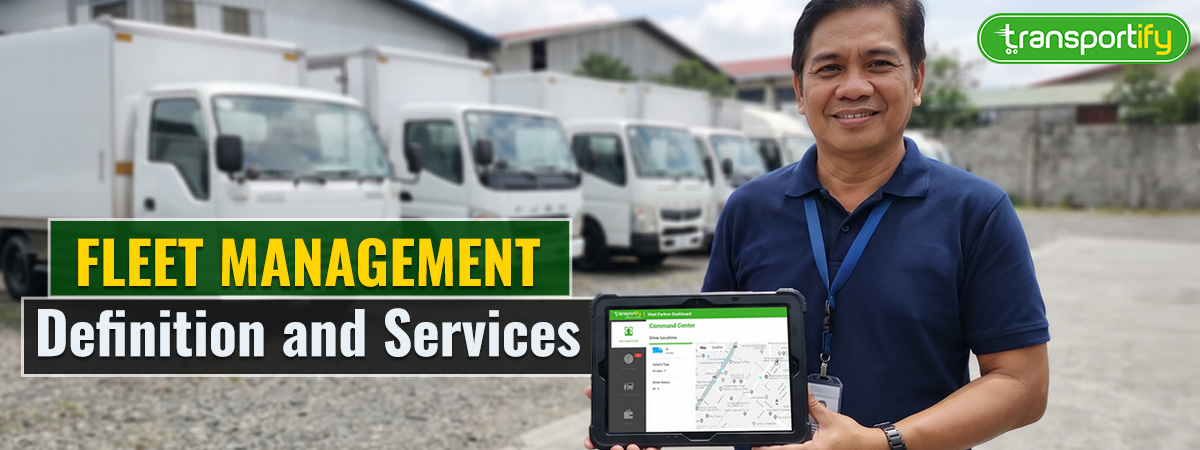
Fleet management is the process of managing a company’s vehicles, drivers, and transport operations to keep logistics running smoothly and costs under control. Fleet management covers key services including vehicle tracking, maintenance management, route planning, and driver monitoring. Companies that manage their fleets effectively cut unnecessary spending and improve delivery performance without proportionally increasing costs.
What is Fleet Management?
Fleet management is the process of managing vehicles, drivers, and transport operations within a business. Fleet management gives companies the systems and data to monitor efficiency and coordinate logistics across their delivery fleet. The goal of fleet management is to improve productivity at a lower cost per delivery. This goal is achieved by real-time fleet tracking, preventive vehicle maintenance, route optimization, and driver behavior monitoring. Each fleet management function produces measurable cost and performance data that fleet managers use to make decisions about logistics planning. For example, fleet breakdown frequency shows which vehicles break down often enough to justify replacement.
Corporate account users of Transportify have access to a central dashboard where they can monitor every delivery in real time. Live 24/7 customer support agents and a dedicated account manager also assist businesses in coordinating bookings and resolving issues.
What Does Fleet Management Mean for Businesses?
Fleet management means that businesses have a structured system for organizing and controlling all transportation activities. Fleet management activities range from vehicle availability and scheduling to maintenance planning and delivery performance tracking.
Fleet management is relevant for Philippine businesses because of factors such as fuel costs and traffic congestion, which increase operating costs. A business operating a fleet of delivery vehicles without fleet management visibility is prone to preventable fuel waste and productivity losses.
Is Fleet Management Only About Managing Vehicles?
No, fleet management is not only about managing vehicles. Fleet management also covers driver performance, route efficiency, regulatory compliance, fuel consumption, and data analytics.
How does a Fleet Management System Work?
How does a Transport Management System relate to Fleet Management?
A Transport Management System (TMS) relates to fleet management as the planning and optimization layer that determines which cargo moves and where it goes. Fleet management systems provide the vehicle and driver data that makes the cargo logistics planning executable in real conditions. A TMS plans the load, and a fleet management system determines which truck can execute the operation.
A TMS in terms of resource assignment determines the most efficient delivery route and assigns booking details. The TMS then pulls availability data from the fleet management system to confirm which vehicles are available for the trip. TMS software for real-time visibility calculates accurate estimated times of arrival (ETAs) for customers by drawing live GPS tracking data directly from the fleet management system. A fleet management system also assists in routing synergy by flagging a vehicle for maintenance.
Does a Transport Management System Help Optimize Routes?
Yes, a transport management system helps optimize delivery routes. A TMS analyzes traffic conditions, distance, load weight, and delivery windows to calculate the most efficient path for each vehicle. TMS reduces travel time and fuel costs on every delivery run. TMS route optimization improves operation efficiency to help businesses meet delivery commitments.
What Services are Included in Fleet Management?
The services included in fleet management are vehicle tracking, maintenance management, route planning and driver monitoring. The services included in fleet management cover the full operational cycle of a vehicle fleet.
- Vehicle tracking: Real-time GPS monitoring of every vehicle’s location, speed, and status across active routes. Vehicle tracking gives fleet managers instant visibility into fleet position and movement at all times.
- Maintenance management: Automated scheduling of vehicle servicing, repairs, and inspections based on mileage or engine hour thresholds. Maintenance management prevents breakdowns before they interrupt delivery operations.
- Route planning: Optimization of delivery paths using traffic data, distance calculations, and vehicle load parameters. Route planning reduces fuel consumption, shortens trip times, and increases daily delivery capacity.
- Driver monitoring: Continuous tracking of driver behavior indicators including speed, braking, acceleration, and idle time. Driver monitoring is used to improve safety compliance and reduce fuel waste caused by inefficient driving patterns.
Transportify integrates fleet management services into its logistics platform. Transportify uses real-time GPS tracking, keeps its fleet vehicles maintained and road-worthy, optimizes delivery routes, and works with vetted driver partners.
1. Vehicle Tracking
Vehicle tracking in fleet management is the real-time monitoring of a fleet’s movement and operational status using GPS and telematics technology. Vehicle tracking provides the live data that every other fleet management function depends on to operate accurately.
GPS devices installed in each vehicle transmit location data continuously to a central fleet management platform. Managers can view every unit on a live map at any point during delivery operations. Vehicle tracking data includes position, speed, engine status, and stop duration to give dispatchers a complete picture of fleet activity.
2. Maintenance Management
Maintenance management in fleet management is the process of scheduling and completing vehicle repairs to keep a fleet in safe and working condition. Maintenance management helps schedule repairs through automated alerts that notify managers when a vehicle is due for repair. Fleet management removes the reliance on manual record-keeping for vehicle maintenance. Fleet management systems collect engine diagnostic data continuously from each vehicle’s telematics device. The fleet management system generates an automated alert when a vehicle approaches a service threshold.
3. Route Planning
Route planning in fleet management is the process of determining the most efficient path for each vehicle based on delivery schedules, traffic conditions, load requirements, and distance. Fleet management improves delivery efficiency by using live traffic data to guide drivers through less congested roads to shorten trip times and reduce fuel consumption on every delivery.
Businesses that apply structured route planning to their logistics operations reduce fuel costs and improve on-time delivery rates simultaneously. Route optimization is crucial for e-commerce and food delivery businesses in the Philippines to ensure customer satisfaction.
4. Driver Monitoring
Driver monitoring is the systematic tracking and analysis of driver behavior to improve safety. Fleet management uses driver monitoring to record data points that indicate driving habits to give fleet managers evidence they need to coach drivers and correct unsafe habits.
Telematics devices and AI-assisted systems capture driver behavior events in real time and assign performance scores that fleet managers can review. High-frequency hard braking events indicate unsafe following distances. Excessive idling events indicate fuel waste during wait times. Consistent speeding events indicate non-compliance with road safety rules that expose the business to accident liability and regulatory penalties.
How does Freight Management Support Fleet Operations?
Freight management supports fleet operations by organizing cargo movement, coordinating shipment scheduling, and aligning load assignments with available vehicle capacity and driver schedules. Freight management removes planning gaps from fleet operations that cause idle vehicles and missed delivery windows.
Businesses that apply structured freight planning reduce freight costs by improving carrier selection and route assignments before dispatch. Philippine logistics providers that handle both local and inter-island cargo rely on effective freight management to match cargo demand with real fleet capacity on every run. Matching loads to available trucks before dispatch means fewer empty runs.
Does Freight Management Improve Delivery Efficiency?
Yes, freight management improves delivery efficiency. Freight management enables better shipment coordination and reduces delays by ensuring cargo is matched to the right vehicle, route, and schedule before dispatch. Efficient freight management also shortens lead times, lowers the cost per delivery, and gives customers more accurate arrival estimates.
What is the Role of a Fleet Manager in Fleet Management?
The role of the fleet manager in fleet management includes overseeing vehicles, drivers, and transport operations to ensure that the company’s logistics run safely, efficiently, and within budget. Fleet managers keep operations moving by making sure every vehicle is road-ready and every driver is performing within company and regulatory standards. Fleet managers manage procurement decisions, from acquiring new vehicles to retiring aging ones.
Modern fleet managers increasingly rely on data and digital tools to carry out their responsibilities more effectively. Real-time telematics, automated maintenance alerts, and performance dashboards give fleet managers the visibility they need to make faster decisions on routing, driver deployment, and cost control without relying on manual reporting. Philippine fleet managers can use Transportify to support their management responsibilities. Transportify provides the booking management, GPS tracking, and route optimization tools that support a fleet manager’s role in one accessible system.
How can Transportify Support Fleet Management for Fleet Owners?
Transportify supports fleet management for fleet owners through a centralized platform to monitor bookings and track deliveries in real time. Fleet owners and dispatchers can use Transportify’s platform to accept bookings on behalf of their entire truck fleet and assign each booking to the right driver and vehicle without manual coordination or paperwork.
Fleet owners can start using Transportify by registering their vehicles and drivers through Transportify’s onboarding process. Drivers undergo an online training session and submit the required documents before activation. Once onboarded, the fleet owner can assign incoming platform bookings to specific drivers within their fleet.
Is Transportify a Reliable Tool for Fleet Management?
Yes, Transportify is a reliable tool for fleet management and logistics coordination in the Philippines. Transportify’s platform supports booking, tracking, and delivery management through a single mobile and web application used by businesses across the Philippines.
Transportify connects businesses with professional driver partners and offers a wide selection of vehicle types to match different cargo sizes and delivery requirements. Transportify bookings include a track-and-trace feature that gives both senders and recipients real-time visibility over every delivery. Transportify’s batch booking capability also lets fleet operators manage multiple simultaneous deliveries without switching between systems.
How Can Fleet Management Help Fleet Owners Grow Their Business?
Why Should Fleet Owners Use Transportify to Strengthen Fleet Management?
Fleet owners should use Transportify to strengthen fleet management because the platform provides ready-made digital logistics infrastructure that eliminates the need to build proprietary dispatch, booking, and tracking systems from scratch. Transportify’s platform is valuable for small and medium fleet operators in the Philippines who have the vehicles and drivers to scale but lack the technology that makes scaling operationally manageable.
Transportify’s booking, tracking, and route optimization features give fleet owners measurable operational advantages. Transportify’s route optimization algorithms help drivers take the most efficient paths on every trip. For Philippine fleet owners competing in the logistics market, technology integration through Transportify supports faster and more efficient operations without requiring heavy capital investment in proprietary fleet software.
Can Digital Booking Platforms Increase Fleet Management Revenue?
Yes, digital booking platforms can increase revenue opportunities for fleet owners and logistics businesses. Digital booking platforms allow faster booking processes and improved delivery efficiency that attract more customers by reducing the friction that discourages businesses from using transport services that can’t offer reliable ETAs, real-time tracking, or consistent service quality.
Digital platforms expand a fleet’s effective booking capacity. A fleet owner using a platform like Transportify can accept more bookings per day than one managing jobs through phone calls and manual scheduling. With digital booking platforms, fleet owners are able to grow their revenue without needing to proportionally grow their administrative overhead.
How do Trucking Management Systems in the Philippines Support Fleet Management?
Trucking management systems support fleet management by helping businesses organize deliveries, manage vehicles, and monitor logistics operations from a single digital platform. Philippine businesses using Trucking Management Systems gain the ability to plan and project network requirements, improve routes, control carriers, organize and track shipments, and automate manual tasks like load booking and tendering.
Digital trucking systems address the specific operational pressures that Philippine logistics businesses face. Traffic congestion in Metro Manila, long inter-provincial haul distances, and rising fuel costs all demand a higher level of scheduling and tracking precision than manual coordination can provide. TMS is effective in helping small-sized Filipino businesses manage operations and tracking in challenging conditions.
What Makes a Trucking Management System Important in Fleet Management?
A trucking management system is important in fleet management because it centralizes logistics and operational data into one platform which removes information fragmentation that causes delays and miscommunication across large vehicle fleets. When scheduling, routing, carrier control, and tracking feed one system, managers see the full operation instead of separate reports.
Better coordination through a trucking management system directly reduces delays and operating costs. Transportify’s trucking management system in the Philippines enables businesses to improve route efficiency, reduce downtime, and lower wasted resources by giving dispatchers the data they need to make smarter load and vehicle assignments before trucks leave the depot.
Can a Trucking Management System Enhance Fleet Visibility in Real Time?
Yes, a trucking management system enhances fleet visibility in real time. Businesses can view vehicle locations and shipment progress instantly through GPS-integrated dashboards that update continuously as trucks move along their assigned routes. Fleet managers and corporate account users can view exact vehicle locations, current delivery status, estimated arrival times, and route deviation alerts at any moment during operations without waiting for driver check-in calls or end-of-day reports.
Why is Fleet Management Important for Business Growth?
Fleet management is important for business growth because it improves transportation efficiency, tightens cost control, and builds the operational reliability that customers expect from a logistics partner. Businesses that run organized fleet operations deliver on time more consistently, spend less per delivery, and respond to disruptions faster than those still relying on manual coordination.
Fleet management directly supports customer service quality. Businesses earn repeat clients and referrals that fuel long-term growth when vehicles arrive on schedule, cargo arrives intact, and customers receive accurate ETAs. With a fleet management system in place, on-time delivery no longer depends on which dispatcher is on shift.
How does Fleet Management Help Control Costs and Assets?
Fleet management controls costs and assets by monitoring performance metrics to identify and eliminate unnecessary expenses. Fuel is typically the largest variable expense for fleet operators, and telematics-equipped fleet management systems reduce fuel waste by identifying inefficient driving behaviors such as excessive idling, harsh acceleration, and route deviations.
Maintenance cost control is the second major area where fleet management protects profitability. Preventive maintenance scheduling extends vehicle lifespan and reduces emergency repair costs by catching mechanical issues early.
Fleet management provides asset utilization data which reveals whether the fleet is appropriately sized for its workload. Fleet management systems generate vehicle utilization rate reports that identify which units are consistently underloaded or inactive, allowing fleet managers to reallocate or reduce underperforming assets before they keep costing money.
Can Fleet Management Software Improve Overall Efficiency?
Yes, fleet management software improves overall efficiency across every facet of a transport business. Automation and real-time tracking simplify logistics coordination by replacing manual data entry, phone-based dispatching, and paper-based reporting with systems that update as trucks move.
Fleet management software acts as a central data platform where vehicle health, driver behavior, fuel consumption, and delivery performance metrics are collected and accessible in one interface. Fleet management’s centralization of data gives managers a comprehensive operational picture needed to make accurate decisions. Philippine businesses that deploy fleet management software can achieve better vehicle uptime and lower per-trip costs than those that still rely on manual coordination.







 Chat