



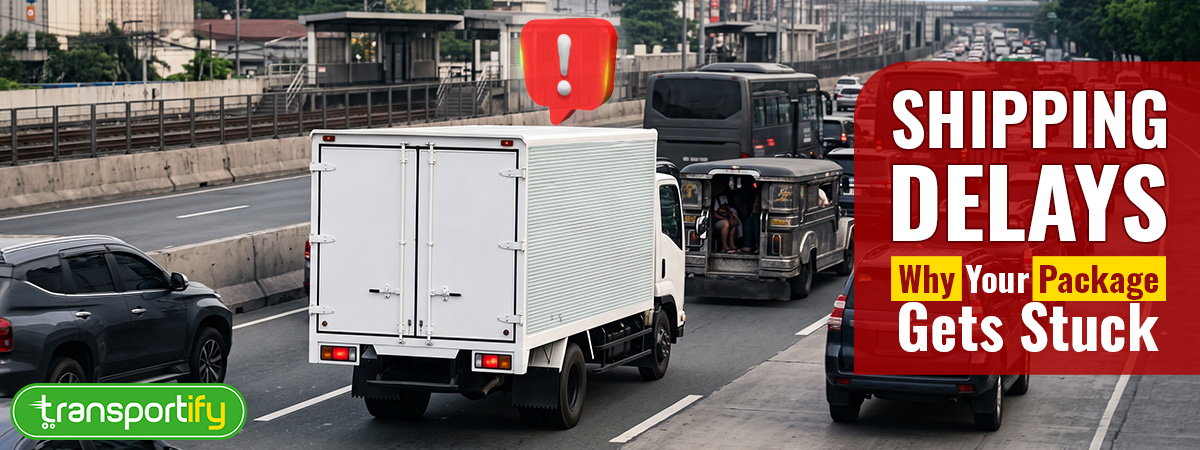
Shipping delays happen when any part of the delivery chain is disrupted by an internal or external factor that prevents cargo from moving on schedule. Shipping delays in the Philippines occur due to road congestion, archipelagic geography, and seasonal typhoons create compounding logistics challenges. A single delay can cascade into multi-day delivery setbacks across an entire route network.
Businesses reduce shipping delays by building operational systems that detect disruptions early and respond before they compound. Businesses must maintain accurate shipment data, diversify carrier and route options, schedule deliveries outside peak periods, and invest in real-time tracking tools that give logistics teams visibility into every active shipment. Shipping delays in logistics management happen when the gap between planned delivery conditions and actual conditions is too wide for a static routing and scheduling system to absorb. Traffic, weather, documentation errors, equipment failures, and demand surges make it difficult for manual dispatch to anticipate or correct deliveries in time
1. Traffic Congestion
2. Bad Weather Conditions
Bad weather conditions directly cause shipping delays by making roads impassable, reducing driver visibility and forcing carriers to suspend scheduled trips. Bad weather conditions in the Philippines include typhoons, heavy rain, flooding, and storm surges. The Philippines experiences an average of 20 typhoons per year. The most typhoons that make direct landfall across Luzon, Visayas, and Mindanao cause the shut down of ground, sea, and air transport simultaneously across wide geographic areas. Heavy rain events regularly cause flash flooding on low-lying provincial routes that block delivery vehicles for hours and make estimated arrival times impossible to maintain. Businesses operating delivery schedules without weather contingency plans absorb the full delay cost of every weather event on their active routes.
3. Road Closures and Construction
Road closures and construction projects force delivery drivers onto longer alternative routes that increase trip distance, fuel consumption, and travel time. National road rehabilitation programs and urban infrastructure projects in the Philippines regularly close or narrow major roadways without advance notice. The unannounced closing of major roadways causes delivery drivers to adjust their route without pre-planned detour options. Temporary roadblocks set up for safety inspections, local government events, or emergency repairs create the same rerouting requirement with less predictability. Logistics operations that rely on static route assignments without real-time traffic monitoring tools are vulnerable to road closures and construction delays, because they have no mechanism to detect a closure and reroute until the driver is already stopped at the blockage.
4. High Shipping Demand
High shipping demand during peak seasons, sales events, and holiday periods generates more orders than carrier networks are built to process at their standard operating pace. High shipping demand creates delivery backlogs that extend across days or weeks. Philippine logistics volumes spike significantly during Christmas season, 11.11 and 12.12 e-commerce sale events, and back-to-school periods, that consistently exceed the surge capacity that small and medium logistics providers have prepared. Each shipment waits longer at every stage of the fulfillment cycle before it reaches the recipient when order volume exceeds available vehicle, driver, and warehouse processing capacity simultaneously. Carriers that do not secure additional vehicle and driver capacity before peak periods begin absorb the full backlog cost in the form of customer complaints, redelivery expenses, and lost future business.
5. Incorrect Shipping Information
Incorrect or incomplete shipping information prevents successful first-attempt delivery and generates redelivery cycles that can delay final receipt by multiple days. Incorrect and incomplete information include wrong addresses, missing barangay or unit numbers, and inaccurate recipient contact details. Address formatting inconsistencies across barangay subdivisions, unlabeled buildings, and informal settlements make incorrect address data a particularly frequent cause of failed delivery attempts in both urban and provincial areas in the Philippines. When a driver arrives at an unverifiable address and cannot reach the recipient by phone, the shipment returns to the warehouse for rescheduling, restarting the delivery cycle from the beginning. Businesses that validate address data at the point of order entry eliminate this cause of delay before it enters the fulfillment process.
6. Customs Clearance Delays
Customs clearance delays occur when international shipments are held at border entry points due to missing documentation, incomplete import/export declarations, misdeclared cargo values, or flagged goods categories requiring additional inspection. The Bureau of Customs (BOC) processes all commercial imports through the Philippines’ ports, and any discrepancy between declared and actual goods can trigger a hold that lasts from hours to weeks. A single missing document, such as a certificate of origin, packing list, or commercial invoice, can hold an entire shipment at the port indefinitely until the deficiency is corrected and resubmitted. Philippine importers who work with experienced customs brokers and prepare complete documentation sets before cargo arrival consistently clear shipments faster than those managing customs paperwork without specialist support.
7. Vehicle Breakdowns
Vehicle breakdowns interrupt delivery schedules when trucks, vans, or motorcycles develop mechanical problems mid-route. Vehicle breakdowns leave shipments stranded until a replacement vehicle can be dispatched. The Philippines’ delivery fleet often relies on aging vehicles that are more prone to engine failures, tire blowouts, and electrical problems, especially after extended use during peak seasons. Recovery time can stretch into several hoursWhen a breakdown happens in a remote barangay or along a provincial highway far from the nearest service center. Businesses that rely on third-party couriers should ask about fleet maintenance standards and backup vehicle availability as part of their logistics partner evaluation.
8. Port Congestion
Port congestion slows cargo loading, unloading, and processing at Philippine ports. Port congestion creates queues that push shipment release times back by days. The Manila International Container Terminal (MICT) and South Harbor handle the majority of the country’s international cargo, and when container dwell times run long, yard utilization climbs toward the 85 to 90 percent threshold that the Bureau of Customs considers a congestion warning level. The Philippine Ports Authority (PPA) has urged cargo owners and consignees to promptly retrieve cleared shipments to prevent backlogs from building up, particularly during peak trade periods. Delays at Manila’s ports ripple across the entire supply chain, from importers waiting for raw materials to retailers expecting restocked inventory. Global rerouting events such as disruptions to the Red Sea and Strait of Hormuz trade lanes have further compressed vessel scheduling across Asian ports, including Philippine gateways, compounding the domestic congestion.
9. Warehouse Processing Delays
Warehouse processing delays happen when sorting, packing, labeling, or inventory handling inside a facility takes longer than scheduled. Warehouse processing delays push the dispatch of outgoing shipments past their committed cutoff times. High parcel volumes, understaffing during shift changes, and poor warehouse layout all contribute to processing bottlenecks that accumulate throughout the day. E-commerce fulfillment centers in the Philippines that handle thousands of orders daily are particularly vulnerable during promotional sales periods when order intake surges faster than the warehouse team can process. A package that misses the day’s dispatch cutoff by even a few minutes typically waits until the following cycle, effectively adding one full business day to the delivery timeline. Businesses that invest in warehouse management systems, barcode scanning, and automated order routing reduce processing time per order and increase the number of shipments that clear the warehouse within the same shift window.
10. Lack of Available Drivers
A lack of available drivers reduces delivery capacity and forces carriers to consolidate routes or defer shipments to the next available schedule. The Philippines faces a documented 20 to 30 percent shortage of cargo truck drivers in the Manila port area. The shortage of drivers in the Philippines are driven largely by strict licensing requirements, including the Land Transportation Office’s (LTO) requirement for a minimum of four years’ driving experience before a driver can obtain a Code CE license for heavy articulated vehicles. The driver shortage is worsened by the physical demands and difficult working conditions of long-haul trucking, which discourages new entrants into the profession. Absenteeism, driver illness, and scheduling gaps during peak periods amplify the shortage effect. The shortage of drivers leaves carriers unable to cover all planned routes and forcing delay decisions on the least time-critical deliveries in the queue. Logistics businesses that rely on a single pool of employed drivers without access to an on-demand driver network are most exposed to this delay, particularly during holiday seasons when driver availability contracts further.
11. Failed Delivery Attempts
Failed delivery attempts add time to the overall delivery process when recipients are unavailable, gates are locked, or contact numbers go unanswered during the delivery window. Last-mile delivery to residential addresses in the Philippines depends heavily on the recipient being present or a designated representative being accessible. Most couriers reschedule for the next available day when a first attempt fails, and repeated failed attempts can trigger a return-to-sender process that cancels the delivery. Providing a complete address, a working mobile number, and clear delivery instructions helps couriers succeed on the first attempt. Carriers that offer recipient-controlled delivery scheduling tools, parcel pickup points, or real-time delivery notifications that allow recipients to reroute active shipments reduce failed attempt rates without requiring additional driver deployment.
12. Natural Disasters
Natural disasters disrupt transportation routes and logistics operations across wide geographic areas. The Philippines is one of the most disaster-prone countries in the world, regularly experiencing earthquakes, volcanic eruptions, landslides, floods, and typhoons. Typhoon Odette damaged roads, bridges, and port facilities across the Visayas and Mindanao which cut off logistics routes for weeks and stranding cargo across multiple islands in 2021. The January 2022 eruption of Taal Volcano and repeated volcanic activity in the Bicol region closed highways, grounded flights, halted sea transport, and disrupted supply chains across an entire region for an extended period. Recovery from major disasters requires coordinated government and private-sector response before normal shipping operations can resume which makes affected shipments some of the hardest to put back on schedule. Logistics businesses without disaster contingency plans, alternative routing options, and safety stock buffers absorb the full operational and commercial cost of every natural disaster that affects their primary delivery corridors.
13. Shipping Documentation Errors
Shipping documentation errors delay cargo approval and movement by triggering re-inspection, hold orders, or return processes that interrupt the normal flow of goods. Common errors include mismatched consignee names, incorrect goods descriptions, missing export declarations, and discrepancies between packing lists and actual cargo contents. Documentation errors on interisland cargo can hold up releases at provincial ports where processing resources are limited and resolution takes longer than at major terminals like MICT. Businesses that invest in documentation checklists and pre-shipment review processes avoid the cost and reputational damage that comes with delayed cargo
14. Mechanical or Equipment Issues
Mechanical or equipment issues at ports, warehouses, and distribution hubs slow cargo handling operations when cranes, forklifts, conveyor systems, or loading equipment break down or require maintenance. A malfunctioning crane at a container terminal can hold up the unloading of an entire vessel, creating a backlog that takes multiple shifts to clear. Conveyor failures or pallet mover breakdowns in warehouses force manual handling that significantly reduces sorting and packing speeds. Preventive maintenance programs and spare parts availability are critical for logistics operators. Equipment reliability is a function of maintenance program quality, and operations that defer equipment servicing to reduce short-term maintenance cost consistently experience higher-frequency and longer-duration breakdowns than those following scheduled preventive maintenance protocols
15. Interisland Transport Delays
Interisland transport delays affect shipments moving between the Philippines’ more than 7,600 islands when ferry, Roll-on/Roll-off (RoRo), or sea cargo schedules are disrupted by weather, mechanical issues, or port capacity limitations. Sea freight is the backbone of interisland logistics in the Philippines. A RoRo vessel that is delayed or a port that is temporarily closed due to a weather advisory causes a delay that cascades through the entire regional distribution network. The Matnog-Allen, Lipata-Liloan, and Cebu-Ormoc RoRo corridors are among the busiest interisland freight routes in the country and among the most weather-sensitive, with PAGASA sea travel advisories regularly suspending crossings during typhoon season from June through November. Businesses shipping to Visayas and Mindanao should factor in buffer days to account for the inherent unpredictability of sea schedules.
16. Security and Inspection Checks
Security and inspection checks extend processing time when cargo is selected for additional screening by port authorities. The BOC conducts both random and targeted examinations of import and export cargo, and a formal examination. Examinations are when containers are physically opened and inspected which add one to several days to a shipment’s release timeline. Security alerts, intelligence reports, or a shipper’s compliance history can trigger more frequent inspections. Businesses must maintain a clean track record with customs authorities to reduce disruptions from security and inspection checks. Importers enrolled in the BOC’s Authorized Economic Operator (AEO) program experience fewer and faster inspections as a benefit of their accredited status.
17. Fuel Supply Issues
Fuel supply issues affect transportation schedules when shortages or sharp price increases force logistics operators to reduce trips, consolidate routes, or temporarily suspend operations. The Philippines is heavily dependent on imported petroleum products, which makes domestic fuel availability sensitive to international supply chain events such as the 2026 Middle East conflict’s impact on global oil trade routes. Fuel price spikes that exceed a carrier’s operating margin on specific routes can also prompt service suspensions or rate adjustments that delay cargo already booked at pre-surge rates. Businesses that lock in logistics contracts with fuel surcharge provisions have more predictable costs, but they still face the risk of actual service reductions when supply is constrained.
18. Poor Route Planning
Poor route planning increases travel time and fuel consumption by sending delivery vehicles along inefficient paths that add unnecessary distance or time to each stop. Drivers may cover the same geographic area in a disorganized sequence, spend time backtracking between stops, or get caught in avoidable traffic during peak hours. Manually planned routes created by dispatchers unfamiliar with current traffic patterns consistently produce longer average trip times than routes generated by algorithm-based planning tools that account for road conditions, delivery time windows, and vehicle load constraints simultaneously. Logistics companies that use AI-powered route optimization tools reduce delivery times and fuel costs while improving the number of successful deliveries per driver per day.Limited transportation capacity delays shipments when the number of trucks, vans, containers, or other transport resources available to a carrier is insufficient to handle the volume of bookings it has accepted within the required delivery windows.
19. Limited Transportation Capacity
Limited transportation capacity delays shipments when the number of trucks, vans, containers, or other transport resources available to a carrier is insufficient to handle the volume of bookings it has accepted within the required delivery windows. Capacity constraints are most visible during the Christmas peak season when demand for delivery services in the Philippines far outstrips the available fleet of carriers and couriers. Small and medium enterprises (SMEs) that rely on spot-booking cargo space, rather than pre-arranged capacity agreements, find themselves at the back of the queue during high-demand periods. Building relationships with logistics providers and securing pre-booked capacity ahead of peak seasons gives businesses more reliable access to transportation resources when competition for slots is highest
20. Public Holidays and Non Working Days
Public holidays and non-working days reduce delivery capacity by limiting warehouse operations, driver availability, and courier services to skeleton crews or full shutdowns on designated dates. The Philippines observes both regular public holidays and special non-working days throughout the year, and the Department of Labor and Employment (DOLE) mandates specific pay rules that increase the labor cost of operating on these dates, which some smaller logistics providers absorb by simply closing. Shipments dispatched just before a long holiday weekend, such as Holy Week, Christmas break, or National Heroes Day, often experience multi-day delays because processing halts and only resumes on the next regular working day. Senders who are aware of the Philippine holiday calendar and build lead time into their dispatch schedule avoid the frustration of packages sitting idle in a warehouse for days.
What does Shipment Delayed Mean in Tracking Updates?
A shipment delayed status in a tracking update means the package has encountered an interruption that is preventing it from moving through the delivery network at the originally scheduled pace. The shipment delayed status does not indicate the shipment has been cancelled, rerouted to the wrong destination, or lost. The shipment delay status indicates that a specific leg of the journey is taking longer than the carrier’s system projected when the delivery window was set. Delivery legs where delays could happen include but are not limited to sorting facilities, customs checkpoints, transit hubs, or last-mile handover points. Shipment delayed notifications in the Philippines are most common during typhoon season, peak sale periods, and long holiday weekends. Recipients who see a delayed status and do not receive an updated estimated delivery date within 24 to 48 hours should contact the carrier’s customer service directly, as agents can access more detailed shipment event data than what the public tracking interface displays.
Does “Delayed in Transit” Mean the Package Is Lost?
No, “delayed in transit” does not mean the package is lost. The status specifically indicates that the package is still within the carrier’s delivery network and is moving toward its destination, but more slowly than the original timeline projected. A package is officially considered lost when it stops receiving tracking updates entirely and the carrier can no longer locate it after a search. The practical step for Philippine consumers is to contact the courier’s customer service hotline or chat support with the tracking number in hand. Most local carriers can identify the exact hub where the parcel is sitting and provide a revised delivery window.
Why do Shipping Delays Happen in Logistics Management?
Shipping delays happen in logistics management because of operational breakdowns, transportation disruptions, and external factors that interrupt the planned movement of goods from origin to destination. Shipping delays in logistics management compounds when one stage slows down as the delay effect propagates forward through every connected step.
Common operational causes of shipping delays are weak coordination between warehouse and transport teams, inaccurate shipment information that generates handling errors, and rigid scheduling that has no capacity to absorb disruptions when they occur. Transportation causes include traffic congestion, route inefficiencies, vehicle breakdowns, and carrier capacity shortages during peak demand periods. External causes, including weather events, port congestion, and public holidays, sit outside carrier control but compound the impact of internal weaknesses when both occur simultaneously. Logistics management in the Philippines faces compounding challenges including geographic complexity across more than 7,600 islands, seasonal typhoons, inconsistent road infrastructure, and manual processes that are still common among smaller logistics providers.
Logistics coordination plays a decisive role in how quickly delays are identified and resolved. Operations with real-time shipment visibility, proactive communication protocols, and contingency routing options detect delay triggers earlier and respond before a single disruption compounds into a multi-day setback. Logistics without systems that mitigate delays absorb the full duration of every delay because they have no mechanism to intervene between the disruption event and the eventual delivery failure.
How does Shipping Logistics Management Affect Delivery Timelines?
Shipping logistics management affects delivery timelines by controlling the scheduling, routing, and coordination of every step between order placement and final delivery. Effective logistics management compresses the time between each delivery stage by ensuring carriers are available, routes are optimized, and documentation is complete before cargo moves. Supply chains in the Philippines often span multiple islands and involve a mix of air, sea, and land transport. The quality of logistics coordination directly determines whether a shipment arrives on time or gets stuck at a transfer point.
Poor logistics coordination increases delivery timelines at nearly every stage. Manual processes cause AWB (air waybill) generation errors, tracking delays, and inaccurate scheduling that push shipment dispatch past committed cutoff times. Businesses that invest in structured shipping logistics management systems, including real-time tracking, automated order processing, and multi-carrier coordination, consistently achieve faster and more reliable delivery timelines compared to those still relying on manual workflows.
Can Poor Shipping Management Lead to Delays?
Yes, poor shipping management causes delivery delays. Weak coordination between order processing, warehousing, and transport dispatch creates gaps where shipments wait without being advanced through the delivery cycle. Inaccurate freight planning that mismatches vehicle capacity to cargo volume, assigns unrealistic delivery windows, or fails to account for peak-period demand creates scheduling failures that generate backlogs before the first vehicle leaves the depot. Philippine logistics operations that rely on manual dispatch processes, paper-based documentation, and siloed communication between departments are most exposed to these management-driven delays because every coordination handoff depends on individuals exchanging information accurately and on time, without automated verification. Businesses that adopt structured shipping management systems with automated order routing, real-time fleet visibility, and integrated carrier communication reduce the frequency and duration of management-driven delays by removing the manual coordination steps where errors and delays most commonly originate.
How do Freight Forwarding Issues Cause Shipment Delays?
Freight forwarding issues cause shipment delays by breaking down the coordination between shippers, carriers, and customs authorities that keeps international and domestic cargo moving on schedule. A freight forwarder is responsible for booking transport, managing carrier handoffs, preparing customs documentation, and monitoring shipment progress across multiple legs of a journey. When any part of freight forwarding coordination fails, the shipment stalls. Understanding how freight forwarding works helps businesses identify where their international and domestic cargo is most vulnerable to preventable delays.
Problems with customs coordination are among the most damaging freight forwarding failures because customs holds can immobilize cargo for days while documentation is corrected, resubmitted, and re-examined. A single shipment held for seven days at a Philippine port due to documentation errors and customs coordination gaps occurs when forwarders rely on manual processes and do not cross-reference documents before cargo moves. Transport coordination failures, such as missed booking windows, carrier substitution errors, or failure to reroute when an original carrier becomes unavailable, generate delays that are equally costly but less visible in the tracking record.
Freight forwarding problems in the Philippines are disruptive for import-dependent businesses. The common issues that cause freight delays include lack of communication between shippers and forwarders, errors in freight documentation, traffic and infrastructure constraints, poor inventory management, and choosing the wrong transport mode for the type of goods being shipped. International shipments are the most exposed because they pass through multiple regulatory checkpoints, and a single documentation error at origin can cascade into customs holds, demurrage charges, and missed vessel connections by the time the cargo reaches Philippine ports.
What Role Does Freight Forwarding Play in Shipping Problems?
Freight forwarding plays a central role in shipping problems because it manages the most complex and error-prone parts of cargo movement, including carrier coordination, customs compliance, and multi-modal route planning. Shipments move through each stage with minimal friction when a freight forwarder executes these responsibilities well. Delays compound quickly across every downstream step when execution is weak.
Delays can occur if coordination between the forwarder and the shipping line, trucking provider, or customs broker is incorrect or delayed. A missed pre-alert to the customs broker at the destination port can mean a shipment sits on the vessel or in a container yard for additional days while clearance is arranged. Effective freight forwarding improves shipment efficiency and timing by using proactive communication, accurate documentation, flexible rerouting when disruptions arise, and peak season planning to secure carrier space before congestion sets in. Businesses that partner with experienced freight forwarders in the Philippines report fewer customs holds, better carrier options, and faster recovery times when disruptions like typhoons or port congestion affect normal schedules.
Can Documentation Errors in Freight Forwarding Delay Cargo?
Yes, documentation errors in freight forwarding delay cargo. Documentation errors prevent customs authorities from approving cargo for release, holds vessels from completing manifests, and blocks carriers from issuing bills of lading. Documentation errors physically stop the shipment from moving until the error is corrected. Common documentation errors include mismatched cargo descriptions between the commercial invoice and packing list, incorrect Harmonized System codes, missing certificates of origin, and weight or quantity figures that differ across documents that automated customs systems cross-reference before issuing clearance.
Philippine customs regulations require complete and consistent documentation across all submitted papers, and any discrepancy identified during electronic or physical examination triggers a hold that requires formal correction and resubmission before the shipment can proceed. Freight forwarders who implement document cross-referencing protocols before cargo moves and confirm HS codes against verified classification databases at the source rather than discovering them after cargo has already been stopped at the port.
How Can Businesses Reduce Shipping Delays?
Businesses reduce shipping delays by combining proactive planning, accurate documentation, and real-time logistics visibility into a system that catches problems before they become missed deliveries. Reactive responses, where business scrambles to fix a delay after it happens, consistently produce worse outcomes than prevention. Typhoon disruptions, interisland transport schedules, and port congestion are recurring realities in the Philippines hence the need to build contingency protocols into the standard shipping process.
Businesses should validate recipient addresses at order entry, verify cargo weights and dimensions before dispatch, and confirm documentation completeness before cargo moves. Businesses are recommended to implement route optimization tools to remove avoidable travel time, establish real-time tracking visibility across all active shipments, and build buffer inventory at key distribution points to absorb demand surges without creating fulfillment backlogs. Businesses that rely on a single carrier are more exposed to delay events because they have no alternative capacity to activate when that carrier’s network is disrupted. Partnering with multiple carriers, pre-booking capacity before peak periods, and setting internal dispatch windows that account for the Philippine holiday calendar removes the reactive pressure that turns manageable disruptions into multi-day delays.
What Steps Help Prevent Order and Shipment Delays?
The steps that help prevent order and shipment delays include accurate documentation, route planning, real-time tracking and inventory management. Preventing shipment delays consistently requires addressing each stage of the fulfillment cycle with a specific operational control rather than relying on a single intervention to cover all delay causes.
- Accurate Documentation: Prevents customs clearance holds, carrier rejections, and BOC inspection delays by ensuring that the bill of lading, commercial invoice, packing list, and export declarations are complete and consistent before cargo moves.
- Route Planning: Improves transport efficiency by mapping optimized delivery sequences, identifying high-risk roads during typhoon season or peak hours, and pre-arranging alternative routes for interisland shipments when primary RoRo corridors face weather closures.
- Real-Time Tracking: Lets businesses monitor shipment progress at every stage, from warehouse dispatch through last-mile delivery, so exceptions like missed scans, hub congestion, or failed delivery attempts can be resolved before they cascade into longer delays.
- Inventory Management: Reduces fulfillment delays by positioning stock closer to demand, preventing stockouts during peak sale seasons, and ensuring that warehouse processing doesn’t become the bottleneck that pushes dispatch past carrier cutoff times.
Businesses that implement all four controls simultaneously address both the predictable and unpredictable causes of delay, because documentation accuracy and inventory readiness reduce internal failures while route planning and tracking tools reduce the impact of external disruptions that cannot be fully prevented.
Can Better Planning Minimize Shipping Problems?
Yes, better planning minimizes shipping problems by removing the conditions that cause most delays before a shipment enters the logistics network. Organized logistics improve delivery coordination and timing by building realistic lead times, securing carrier capacity in advance, preparing contingency routes, and aligning warehouse and transport schedules so each handoff happens without unnecessary wait time.
Proactive preparation lowers the risk of delays by anticipating the disruptions that are predictable in the Philippine context, such as typhoon season congestion, Christmas peak volume surges, and Bureau of Customs inspection triggers for underprepared documentation. Businesses that invest in scenario-based planning, buffer inventory at regional warehouses, and pre-booked carrier agreements absorb disruptions faster and recover delivery timelines more reliably than those that rely on last-minute solutions.







 Chat
Chat