



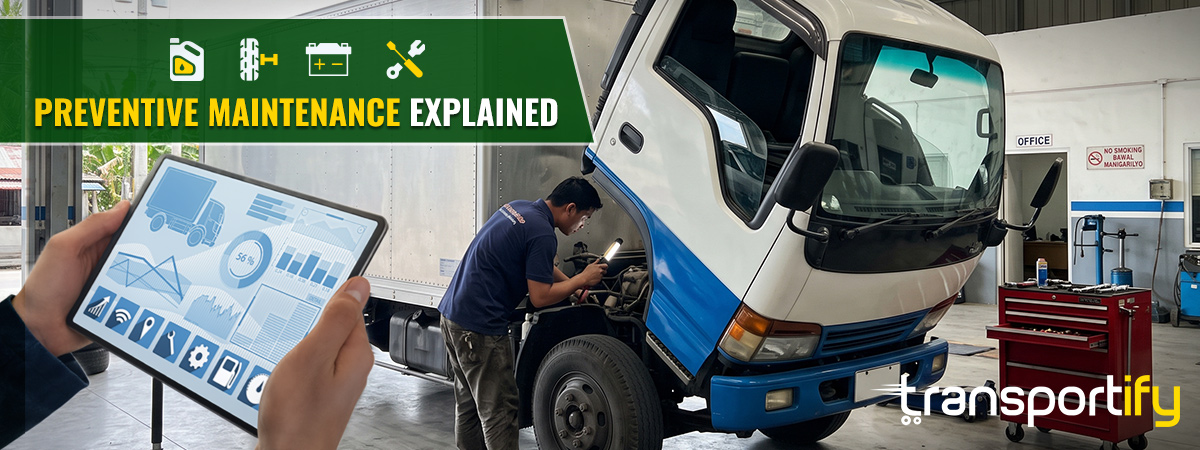
Preventive approach helps equipment last longer and reduces breakdowns when scheduled in advance as part of maintenance management. Trucks and machinery need scheduled care to avoid sudden repair costs. Preventive action also protects their long-term value as capital investments.
Several distinct types of preventive maintenance exist, ranging from calendar-based checks to sensor-driven predictive schedules. Digital platforms now handle much of the scheduling work on their own. Established practices help teams carry out this care consistently across fleets and warehouses.
What is Preventive Maintenance?
Preventive maintenance is the scheduled, proactive servicing of equipment carried out before failure occurs. Time or usage signals trigger each task rather than waiting for a breakdown to happen. Stopping problems before they start sits at the center of this approach. Maintenance teams follow a fixed schedule instead of reacting to random equipment issues. Fixed schedules give maintenance teams a predictable schedule to follow.
Strict maintenance schedule makes unplanned failures drop sharply once a facility commits to the method. Production lines keep running with fewer stoppages. Asset longevity improves alongside business continuity. Equipment that receives consistent care lasts longer before major components need replacement.
Why is Scheduled Servicing Vital for Capital Assets?
Scheduled servicing is vital for capital assets because it protects long-term investments and lowers the risk of unplanned breakdowns.
- Protection of Capital Assets: Protects long-term investments and lowers the risk of unplanned breakdowns.
- Reduced Failure Rates: Decreases equipment failures through a strict servicing calendar to catch defects early.
- Favorable Maintenance Budgets: Shifts maintenance budgets in a positive direction once repair costs drop over time. Small fixes performed during scheduled visits cost less than major overhauls.
- Reallocation of Funds: Allocates funds that would otherwise pay for emergency fixes become available for other operational priorities.
- Extended Asset Lifespan: Gives fleet vehicles extended lifespan before replacement. Extended lifespan reduces capital expenditure pressure and stabilizes fleet refresh cycles.
Capital assets stay productive longer once structural checks and value protection become a service routine.
Does Routine Care Directly Prevent Catastrophic Component Failures?
Yes, routine care directly prevents catastrophic component failures. Scheduled inspections identify wear and stress points early. Small issues get caught by routine care before they escalate into major breakdowns that halt operations.
Technicians replace worn components before they fail completely. Emergency repair costs drop as a result. Safety risks also fall, since catastrophic failures in trucks or heavy machinery often endanger operators and nearby staff. Organizations that lean on preventive and predictive maintenance report 52.7% less unplanned downtime than those stuck in reactive mode, according to recent studies by IFM.
What are the Main Elements of a Preventive Maintenance Program?
A preventive maintenance program includes several core elements that work together to keep equipment reliable. Philippine facilities and fleet operators benefit most when these elements stay clearly defined and visible to every technician.
- Asset Inventory: Cataloging equipment for tracking, so maintenance tasks match the right machines.
- Maintenance Scheduling: Assigning task timelines using calendars or usage counters so inspections happen before failures occur.
- Inspection Checklists: Standardizing routine checks with written steps for measurement across every shift.
- Technician Assignment: Allocating skilled labor by mapping tasks to specific roles, shifts, and certifications.
- Parts and Documentation: Recording history and stock through maintenance logs and spare-parts inventory so future decisions rely on evidence.
The elements of maintenance management link to one another to create a centralized workflow for managers to track and improve asset maintenance.
How does Pre-Planned Inspection Design Support Daily Facility Workflows?
Pre-planned inspection design supports daily facility workflows by placing maintenance checks into time windows that avoid peak sorting hours. A maintenance coordinator first designs the inspection plan around the facility’s shift pattern and cut-off times. Once low-traffic periods are mapped, the coordinator assigns each inspection task to a fixed window within a specific timeframe. The coordinator ensures that the maintenance calendar is integrated with the production schedule.
Time inspections around quieter periods and keep task duration realistic. Workflow interruptions stay minimized since technicians avoid blocking aisles or sorting lanes during peak moments. Facility throughput remains stable because equipment checks follow a fixed schedule, and staff can plan around fixed inspection windows.
Can Calibrated Scheduling Models Noticeably Extend Asset Lifespans?
Yes, calibrated scheduling models can noticeably extend asset lifespans by aligning service intervals with actual wear patterns instead of generic timelines. The schedule is built by using data such as runtime hours and past breakdown records. Precision reduces both under-maintenance and over-maintenance. Equipment degradation slows, and replacement costs get deferred as Philippine businesses gain more productive years from fleets and facility machinery.
What are the Different Types of Preventive Maintenance?
Preventive maintenance splits into several distinct types, each triggered by a different signal such as a fixed date, a usage count, or a sensor reading. Philippine facility managers and fleet operators combine two or three of preventive maintenance types rather than relying on one single approach.
- Time-Based / Calendar Preventive Maintenance: Triggers servicing tasks on fixed calendar dates or intervals, suited to stationary facility equipment like generators and HVAC systems.
- Usage-Based / Runtime Preventive Maintenance: Triggers tasks once an asset accumulates a set mileage or engine hours, common in delivery trucks and forklifts.
- Predictive-Linked Scheduled Maintenance: Feeds real-time sensor data on vibration or temperature into the scheduling cycle.
- Prescriptive / Task-Driven Maintenance Cycles: Uses analytics software to recommend precise technical adjustments based on failure-pattern data.
- Seasonal and Weather-Adjusted Fleet Servicing: Shifts servicing timelines around typhoon season and other seasonal weather changes that affect delivery fleets.
- Statutory and Compliance-Driven Maintenance Audits: Follows legal mandates and safety regulations.
- Opportunity-Based Machinery Overhauls: Bundles preventive tasks into downtime or repair windows a machine already has scheduled.
Each maintenance type answers a different operational question. Combining several types into one program gives Philippine businesses layered protection against both routine wear and sudden disruption.
1. Time-Based / Calendar Preventive Maintenance
Time-based or calendar preventive maintenance is a scheduling model that triggers servicing tasks on fixed calendar dates or regular intervals, regardless of actual equipment usage. Time-interval scheduling functions by assigning tasks such as filter changes or lubrication to specific days or weeks.
Stationary facility equipment fits this model well because usage tends to stay fairly constant across the year. A Philippine warehouse might schedule generator servicing every year or air handling unit checks every month. Maintenance staff plan around a shared fixed schedule.
2. Usage-Based / Runtime Preventive Maintenance
Usage-based or runtime preventive maintenance is a scheduling model that triggers servicing tasks once an asset accumulates a set amount of active mileage or operating cycles. Meter-tracking functions through odometers or cycle counters installed on equipment to compare live readings against a predefined threshold.
A delivery truck reaching a set mileage figure since its last oil change automatically triggers a service task. Heavily used vehicles in a busy Philippine logistics fleet get serviced sooner than lightly used backup units. Maintenance effort matches actual wear rather than following a blanket schedule.
3. Predictive-Linked Scheduled Maintenance
Predictive-linked scheduled maintenance is a model that combines real-time condition monitoring with a pre-planned scheduling cycle. Internet of Things (IoT) sensor linking functions by installing sensors on critical components to continuously monitor variables such as vibration, temperature, or pressure.
Sensor readings that approach a risk threshold feed back into the maintenance calendar and move the scheduled task earlier. Philippine manufacturers adopting the predictive model gain earlier warning of component degradation.
4. Prescriptive / Task-Driven Maintenance Cycles
Prescriptive or task-driven maintenance is a strategy that uses analytics software to recommend specific technical adjustments based on identified failure patterns. Analytics-driven care functions by feeding historical failure data and sensor readings into pattern-recognition software. The output of the analysis are precise instructions such as adjusting torque settings or replacing a specific bearing grade.
The prescriptive model differs from baseline predictive maintenance because it prescribes the exact corrective action a technician should take. Philippine facilities running high-value production lines benefit from this precision. Technicians spend less time diagnosing recurring failure modes and more time resolving them.
5. Seasonal and Weather-Adjusted Fleet Servicing
Seasonal and weather-adjusted fleet servicing is a maintenance model that shifts inspection and repair timelines based on climate conditions. Climate-linked preparation functions by reviewing forecasted weather patterns and prioritizing tasks such as tire checks before conditions turn severe.
Typhoons affect the Philippines most heavily between May and October. Fleet operators typically tighten servicing timelines for delivery vehicles in the months leading into that window. Drivers gain extra protection when brakes, lights, and electrical components get checked before heavy rain or flooding hits.
6. Statutory and Compliance-Driven Maintenance Audits
Statutory and compliance-driven maintenance audits are inspections mandated by law to confirm that a vehicle meets minimum safety standards. Regulatory-mandated servicing functions through government-run or accredited inspection centers. Inspectors check items such as brakes or tires against a fixed checklist.
Commercial vehicles in the Philippines undergo roadworthiness testing at Private Motor Vehicle Inspection Centers under the Land Transportation Office (LTO). Braking systems, suspension, and emissions all get measured against legal thresholds before registration renewal. Fleet operators get documented proof that their vehicles remain legally compliant. Missing a required inspection can result in a vehicle being banned from operation, whether the fleet’s internal maintenance schedule considers the asset due for service.
7. Opportunity-Based Machinery Overhauls
Opportunity-based machinery overhauls are preventive tasks completed while equipment already sits offline for an unrelated repair. Downtime-triggered servicing functions by having the technician review the asset’s upcoming preventive maintenance items when it enters the shop. Tasks are bundled if they are due soon into the current repair visit.
The opportunity-based model reduces total fleet downtime over time because the vehicle only needs to be pulled off the road once to accomplish both the emergency fix and the preventive work. Philippine logistics operations running tight production schedules benefit from this bundling approach. Every stoppage that already interrupts output gets used more efficiently.
How do Digital Systems Execution Models Drive Preventive Workflows?
Digital systems drive preventive workflows by capturing equipment data and generating scheduled work orders. Digital systems also dispatch technicians automatically. Maintenance activity gets centralized into one platform instead of scattered spreadsheets. Facilities teams gain a centralized source of inspection results that all feed into the same scheduling routine.
Real-time data triggers tasks automatically once an asset crosses a runtime or sensor reading threshold. Technicians receive alerts without anyone manually checking a calendar. Digital records store every completed task and part used to build a searchable history that supports audits and future scheduling decisions.
Automation improves efficiency because dispatch, parts requests, and other checks happen inside one connected system. Manual scheduling errors decrease since the platform removes the human step of tracking multiple individual maintenance dates across a fleet. Staff no longer rely on memory to check a spreadsheet, since the platform tracks due dates and usage thresholds continuously.
What Functional Capabilities Must an Automated Maintenance Platform Possess?
An automated maintenance platform must include several core capabilities that work together to keep preventive tasks running without constant manual oversight. Philippine facility managers and fleet operators typically evaluate a platform against these functions before adopting it as their primary maintenance system.
- Scheduling Engine: Automates task timing by calculating due dates from calendar intervals, runtime counters, or sensor thresholds. The platform assigns tasks without staff tracking dates manually.
- Sensor Integration: Captures real-time condition data from connected IoT devices and feeds it into the scheduling logic.
- Work Order Automation: Generates tasks without manual input once a trigger condition gets met. Requests are routed straight to an available technician.
- Parts Inventory Sync: Tracks spare parts availability against upcoming work orders and flags shortages before a scheduled task stalls.
- Reporting Dashboard: Displays performance insights such as completion rates, downtime trends, and cost per asset. The reporting dashboard gives managers visibility into the efficiency of the maintenance program.
These capabilities of an automated maintenance platform function as a single connected chain rather than separate tools. Real-time equipment signals connect directly to the technicians and parts needed to act on them.
Can Automated Trigger Systems Eliminate Manual Service Scheduling Slipped Deadlines?
Yes, automated trigger systems can eliminate manual service scheduling slipped deadlines. Tasks get generated based on fixed intervals or sensor thresholds. Manual tracking gets reduced since the platform monitors due dates continuously. Alerts get generated automatically once a threshold gets crossed and notifies the assigned technician. Missed service windows decrease as a direct result.
How is Preventive Maintenance Executed on Fleet Trucks and Delivery Equipment?
Preventive maintenance on fleet trucks and delivery equipment is executed through scheduled component inspections tied to mileage or runtime. Delivery assets stay road-ready between trips as a result. Fleet managers set service reminders based on odometer readings and standardized service programs for each vehicle type.
Inspections follow set mileage intervals that vary by system before they degrade past a safe limit. Fluids get checked routinely alongside brake pads, tires, and suspension components. Breakdowns during delivery routes decrease measurably under preventive maintenance because most mechanical failures develop gradually and show early warning signs that a scheduled inspection catches before the vehicle is dispatched.
What Core Mechanical Protocols Guide Preventive Truck Maintenance?
Preventive truck maintenance should follow several core mechanical protocols that keep the engine, drivetrain, and braking systems working. Philippine fleet operators running daily delivery routes revolve their maintenance plan around these core mechanical protocols.
- Engine Oil Analysis: Detects internal wear early by identifying metal particles or viscosity breakdown before they damage internal components.
- Tire Rotation Schedules: Extends tread life evenly by shifting wear patterns across all four tires to reduce blowout risk.
- Transmission Flushes: Prevents drivetrain strain by clearing out degraded fluid and debris that would increase friction and heat inside the gearbox.
- Brake System Checks: Confirms stopping reliability by verifying pad thickness, rotor condition, and fluid levels stay within safe limits.
These core protocols address the common causes for roadside breakdowns. A fleet that consistently follows all protocols sees reduced unplanned mechanical failures.
Does Strict Adherence to Mileage-Based Oil and Fluid Analysis Reduce Engine Overhaul Frequency?
Yes, strict adherence to mileage-based oil and fluid analysis reduces engine overhaul frequency. Contaminants and metal particles get caught before causing internal damage that would otherwise cause a full teardown. Regular oil sampling at fixed mileage points reveals early signs of wear.
Oil breakdown gets caught early through a consistent sampling routine. Engine wear slows because a proper oiling keeps internal components lubricated. Overhaul intervals lengthen as a direct result of the consistent monitoring. Repair costs decrease over the vehicle’s service life as engine damage is prevented.
How Should Last-Mile Delivery Vehicles and Sorting Machinery Be Inspected?
Last-mile delivery vehicles should be inspected before every route departs. Check tire pressure and tread depth first, then verify brake response and confirm all lights and signals function correctly. Test the vehicle’s engine fluid levels, including oil, coolant, and brake fluid, and look underneath for any visible leaks.
Complete a Driver Vehicle Inspection Report (DVIR) for every trip. Regulatory frameworks require documented pre-trip and post-trip checks for commercial vehicles, and missing this record can trigger compliance penalties. Log any defect found during the inspection immediately, and pull the vehicle from the route if the defect affects braking, steering, or tire integrity.
Apply the same discipline to sorting machinery at the hub. Inspect conveyor belts for fraying, misalignment, or loose hinge pins before the first shift begins. Test emergency stop functions to confirm they respond instantly. Check motor temperature and listen for unusual noise during a brief test run. Clear any jammed rollers or blocked sensors before parcel volume ramps up for the day. Record every inspection result in the facility’s maintenance log immediately, since this documentation becomes the reference point technicians use to catch defects.
How is Preventive Maintenance Embedded within Supply Chain Operations?
Preventive maintenance gets embedded within supply chain operations by ensuring warehouse equipment, sorting machinery, and delivery vehicles remain functional at every stage of fulfillment. Continuous flow of goods depends on proper coordination from receiving through last-mile delivery. A single breakdown at a sorting hub or a stalled delivery truck can cascade across the entire chain.
Equipment downtime stays minimized across the chain when preventive maintenance schedules cover conveyors, forklifts, and vehicles together. Resources are utilized effectively under the preventive model because staff spend time optimizing workflows instead of troubleshooting unplanned equipment failures. Fulfillment speed improves as a result, and operational risks decrease because fewer unplanned stoppages disrupt the sequence of receiving, sorting, and dispatching orders.
What Operational Metrics Link Scheduled Overhauls to Production Line Throughput?
Operational metrics such as Overall Equipment Effectiveness (OEE), downtime hours, and cycle speeds link scheduled overhauls to production line throughput. These operational metrics quantify how maintenance decisions translate into actual output. OEE combines availability, performance, and quality into one score, calculated as Availability multiplied by Performance multiplied by Quality.
Downtime hours reveal maintenance gaps directly. A rising downtime count after a missed overhaul points to the asset needing attention. Throughput consistency improves when overhauls happen on schedule because production speed stays predictable. Bottlenecks become easier to trace since a drop in cycle speed or OEE score can be matched against the maintenance log for that specific machine.
How does Rigid Fleet Preventive Care Protect Transport Delivery SLA Compliance?
Rigid fleet preventive care protects transport delivery SLA compliance by keeping vehicles road-ready and reducing unplanned breakdowns during transit. Delivery windows remain intact as a result. Logistics providers in the Philippines tie service level agreements directly to on-time delivery rates, so a truck failing mid-route can trigger penalty clauses.
Route disruptions decrease under a rigid preventive schedule because most mechanical failures get caught and corrected during a scheduled inspection. Delivery timelines stay predictable, and client trust improves because shipments arrive within the agreed time window consistently. Penalty costs from missed SLAs also get reduced, since fewer breakdowns mean fewer contract violations to resolve.
Does a Proactive Maintenance Culture Consistently Elevate Customer Satisfaction Rates?
Yes, a proactive maintenance culture consistently elevates customer satisfaction rates. Proactive maintenance means fewer delays translate into more reliable service delivery across every shipment a logistics provider handles. Delivery reliability builds trust with clients who depend on consistent transit times for their own operations. Service complaints decrease when vehicles and equipment rarely break down mid-route. Repeat business increases as clients return to providers who rarely miss a delivery window. Brand reputation strengthens because a track record of dependable service spreads through referrals and renewed contracts.
What are the Industry Best Practices for Executing Preventive Maintenance?
Executing preventive maintenance well depends on several proven industry practices that turn a scheduling system into a sustained, organization-wide discipline. Philippine facility and fleet managers commonly build their programs around these best practices to keep results consistent over time.
- Build a Proactive Culture: Secures organization-wide buy-in by getting leadership, technicians, and operations staff to treat maintenance as a shared priority.
- Track KPIs: Measures program effectiveness through metrics like downtime hours, completion rates, and cost per asset.
- Standardize Checklists: Ensures consistent task execution by giving every technician the same written steps regardless of shift or location.
- Train Technicians: Builds long-term servicing skill through structured onboarding and refresher sessions on new equipment.
- Review and Adjust Plans: Keeps strategies relevant by revisiting schedules as equipment ages or usage patterns shift.
These practices reinforce each other. A proactive culture only sticks when it gets backed by measurable KPIs, and standardized checklists only stay useful when trained technicians follow them consistently.
What Maintenance Practices Help Improve Logistics Performance?
Logistics performance improves through several targeted maintenance practices that align servicing directly with delivery operations. Philippine fleet operators running dense delivery routes typically adopt these maintenance practices to keep trucks moving without sacrificing service quality.
- Shadow-Scheduling: Aligns servicing with delivery downtime by booking maintenance tasks during a vehicle’s natural idle periods.
- Parts Kitting: Pre-stages components for faster repairs by assembling all parts, tools, and instructions a job needs before the technician starts work.
- Route-Synced Servicing: Times maintenance around delivery routes by scheduling inspections near depots or hubs a truck already passes during its normal route.
- Fleet Monitoring: Tracks real-time vehicle condition through GPS and onboard sensors, giving fleet managers live visibility into location and mechanical status.
Combining these practices turns maintenance into a background process that supports delivery speed. Kitted parts and route-synced timing keep trucks off the shop floor for less time.
How can Maintenance Data Improve Decision Making?
Maintenance data improves decision making by revealing recurring failure patterns, costs, and equipment performance trends over time. Informed planning replaces guesswork once these patterns surface across similar assets. Organizations using data to drive maintenance decisions report measurable gains, including reduced maintenance costs and fewer unexpected equipment failures.
Data reveals recurring issues by tracking which components fail repeatedly and points the maintenance teams toward root causes. Performance can be measured against benchmarks once historical records accumulate. Decisions become more accurate, and resources get allocated where they are needed. Budget and technician time can be allocated more toward the assets with the highest failure risk.
Why should Maintenance Plans Be Reviewed Regularly?
Maintenance plans should be reviewed regularly to remain effective as operational needs shift over time. Fixed schedules written years ago rarely match how equipment actually performs under current workloads. Fleet composition, delivery volume, and asset age all change, and a plan that ignores these shifts eventually drifts away from the conditions it was designed to handle.
Performance data supports reviews by showing which tasks catch real problems and which ones run on outdated assumptions. Maintenance priorities may shift with new equipment as fleets add vehicles with different service requirements. Continuous improvement gets encouraged when teams treat the plan as a living document and keep reliability optimized over the long term rather than locked to outdated benchmarks.







 Chat