



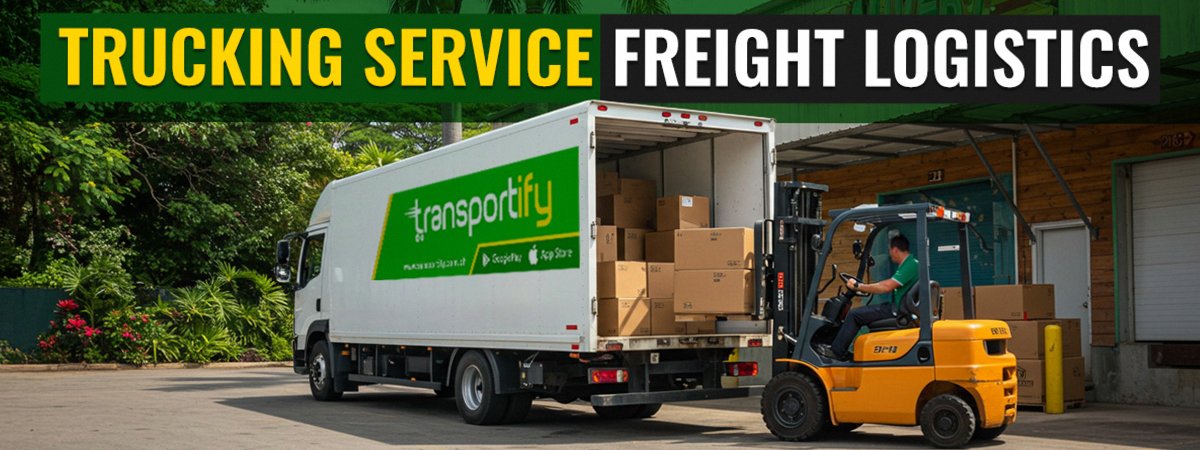
Trucking service freight logistics is the supply chain coordination process for the commercial movement of freight by a truck carrier. Trucking service freight logistics moves each shipment from origin to destination via short-distance delivery or long-haul corridors. The three core components of trucking service freight logistics are transportation, freight, and logistics. Transportation covers the physical movement of goods from the shipper to the receiver by a truck carrier. Freight refers to the commercial cargo that a carrier moves from the pickup point to the delivery point. Logistics manages the routing, scheduling, tracking, and carrier selection for each shipment.
Trucking service freight logistics is part of the growing freight and logistics market in the Philippines. Trucking service freight logistics in the Philippines operates within a freight and logistics market valued at USD 15.26 billion, growing at a 5.93% compound annual growth rate (CAGR). Road-based trucking connects cargo to roll-on, roll-off (RORO) ports and interisland terminals across each island group. Island geography makes infrastructure quality a major variable in how reliably freight moves across the Philippines.
Trucking service freight logistics encompasses eight distinct trucking service types. The eight service types are full truckload (FTL), less than truckload (LTL), flatbed, refrigerated (reefer), intermodal, expedited shipping, heavy haul, and specialized freight. Trucking service freight logistics matches each shipment to the right service type based on cargo requirements and route demand.
Transportify is a Philippine on-demand logistics app that offers different trucking service types. Transportify covers FTL, LTL, and Interisland services. The platform handles carrier dispatch, route optimization, and real-time shipment tracking. Freight load can be matched to the right vehicle class. Vehicle classes range from open-bed trucks to 10-wheeler wing vans. Transportify works as a full third-party logistics partner for businesses moving freight across the Philippines.
What Types of Trucking Services Are Available for Freight Logistics?
The types of trucking services available for freight logistics are full truckload (FTL) shipping, less than truckload (LTL) shipping, flatbed trucking, refrigerated (reefer) trucks, intermodal transportation, expedited shipping, heavy haul, and specialized freight services. Trucking services determine freight transportation cost, transit time, carrier routing, and whether cargo reaches the receiver in the correct condition.
- Full Truckload (FTL) Shipping: A dedicated carrier service that reserves an entire trailer for a single shipper’s cargo. FTL is best suited for large freight volumes requiring direct, non-stop delivery from origin to destination.
- Less Than Truckload (LTL) Shipping: A shared freight service that consolidates multiple shippers’ smaller loads into one truck trailer. LTL reduces per-shipment transportation cost for cargo that doesn’t fill a full truckload.
- Flatbed Trucking: An open-deck trailer service that transports oversized, heavy, or unusually shaped cargo. Flatbed Trucking is used for steel, lumber, construction materials, and industrial machinery that can’t fit inside an enclosed trailer.
- Refrigerated (Reefer) Trucks: A temperature-controlled trailer service that maintains cold conditions during transit. Reefer trucks are used for perishable cargo such as food products, dairy, meat, pharmaceuticals, and medical supplies.
- Intermodal Transportation: A freight logistics method that moves cargo using two or more transport modes within a single shipment. Intermodal transportation uses standardized containers to reduce cargo handling and lower transportation costs across long-distance hauls. Transport modes include truck carrier, rail, and ocean freight.
- Expedited Shipping: A time-critical trucking service that uses dedicated vehicles to move freight directly from shipper to receiver with minimal stops.
- Heavy Haul: A trucking service that transports cargo exceeding standard legal limits for weight, height, or width. Heavy haul requires specialized multi-axle trailers and route permits to move oversized industrial loads safely.
- Specialized Freight Services: A category of trucking solutions that handles cargo requiring custom equipment, special permits, or handling procedures beyond what standard carriers offer. Specialized freight services cover hazardous materials, high-value goods, and oversized project cargo.
Each trucking service type matches a specific commercial freight requirement that standard shipping options can’t always meet. Businesses that match their cargo profile to the right service type reduce unnecessary transportation costs and minimize handling errors during transit.
Transportify is a Philippine logistics platform that provides FTL, LTL, open truck freight, and interisland delivery trucking services. Transportify operates a fleet that ranges from sedans to wing vans. Transportify services include real-time GPS tracking, app-based booking, and same-day or scheduled dispatch. Businesses that need to match cargo to the right trucking service type can book FTL or LTL options through Transportify on demand or under a contract arrangement.
1. Full Truckload (FTL) Shipping
Full truckload (FTL) shipping is a dedicated carrier service that reserves an entire trailer for a single shipper’s cargo. FTL shipping uses no freight consolidation and makes no intermediate stops between origin and destination. The entire trailer space for FTL belongs to the shipper’s cargo exclusively. Full truckload shipping suits cargo volumes that exceed 4,500 to 6,800 kilograms or fill 75% or more of a standard 10-wheeler wing van.
FTL shipping is the most direct trucking service available for commercial freight. Full truck load shipping reduces the number of cargo handling points because the load doesn’t transfer hands between terminals. Fewer handling points lower the risk of cargo damage compared to services that consolidate multiple loads.
FTL shipping works best for manufacturers, distributors, and retailers shipping high-volume orders. FTL shipping use cases include automotive parts shipments, palletized retail inventory, and bulk consumer goods. FTL’s use cases apply when the shipper can’t afford to share trailer space or accept extra cargo handling. Full truckload shipping runs mostly on long-haul routes, where transit time and cargo security matter most. Shippers arrange full truck load (FTL) shipping through Transportify to book dedicated cargo truck capacity, compare service rates for long-haul bulk routes, and access real-time shipment tracking for nationwide delivery.
2. Less Than Truckload (LTL) Shipping
Less than truckload (LTL) shipping is a freight consolidation service that combines multiple shippers’ smaller cargo loads into a single shared trailer. LTL shipping allows each shipper to pay only for the space their freight occupies. Less than truckload shipping handles cargo weighing between 70 and 6,800 kilograms. LTL’s weight range makes it the standard choice for shipments that don’t fill a standard truck on their own.
LTL shipping suits small- to mid-sized businesses that regularly move 1 to 6 pallets. Seasonal shippers who don’t maintain consistent truckload volumes benefit from less than truckload shipping. Less than truckload service is the better choice for operations where per-unit freight cost matters more than transit speed.
Philippine LTL freight pricing is based on cargo weight, volume, and commodity type. Carriers apply a dimensional weight formula to shipments whose volume exceeds actual weight. Dimensional weight becomes the chargeable weight for those shipments. Longer routes increase LTL freight transportation costs. Higher commodity risk classifications further raise carrier rates. Lower-density, easily handled cargo costs less per kilogram to ship than fragile, hazardous, or regulated goods. Businesses shipping non-fragile cargo at sub-truckload volumes access less than truckload (LTL) shipping rates through Transportify, paying only for the trailer space their cargo occupies across Philippine routes.
3. Flatbed Trucking
Flatbed trucking is an open-deck freight service that transports oversized, irregularly shaped, or heavy cargo. Flatbed trucking handles cargo that can’t fit inside an enclosed trailer due to height or load configuration. Flatbed trailers use a flat, open platform without walls or a roof. The open platform allows cargo to be loaded from any orientation. Cranes, forklifts, and heavy lifting equipment perform that loading work directly on the deck.
Standard flatbed trailers in the Philippines run 7 to 9 meters in length and up to 2.5 meters wide. Flatbed trailer decks carry cargo to a maximum legal height of 4.0 meters from the ground under Republic Act 587. Payload capacity on a standard Philippine flatbed truck reaches between 12,000 and 15,000 kilograms. Any load that exceeds 2.5 meters in width or 4.0 meters in height is classified as oversized. Oversized loads require special permits, pilot cars, and route pre-approval before dispatch.
Cargo types for flatbed trucking are freight that requires full loading access from above or the side. Examples include steel beams, structural lumber, large pipes, construction machinery, prefabricated building panels, industrial equipment, wind turbine blades, and military hardware. Shippers moving these cargo types book flatbed trucking when the cargo physically can’t enter an enclosed trailer and requires side or top loading access at origin and destination. Shippers confirm vehicle availability, load configuration requirements, and route coverage for flatbed trucking before dispatching oversized or irregularly shaped cargo across Philippine routes.
4. Refrigerated (Reefer) Trucks
Refrigerated (reefer) trucks are temperature-controlled freight carriers that maintain precise climate conditions inside the trailer during transit. Reefer trucks protect perishable and temperature-sensitive cargo from spoilage and product contamination. Refrigerated trucks use a diesel-powered compressor system that actively regulates interior temperature from -29°C to 26°C during transit.
Standard reefer trailers maintain temperatures between -29°C and 26°C. Frozen goods such as meat and seafood require temperatures at or below -18°C. Chilled fresh produce ships between 0°C and 5°C. Pharmaceutical products require a strict 2°C to 8°C range with no deviation during transit. RA 10611 (Food Safety Act of 2013) requires reefer operators transporting food or pharmaceutical cargo in the Philippines to hold documented temperature records and maintain consistent cold chain conditions throughout delivery.
Refrigerated trucks are the standard freight solution for grocery distributors, food manufacturers, pharmaceutical companies, and floral suppliers. Cold chain integrity has to hold from origin to delivery for reefer truck freight.
5. Intermodal Transportation
Intermodal transportation is a freight logistics method that moves cargo using two or more transport modes for a single container. Intermodal transportation uses truck carriers, roll-on, roll-off (RORO) sea freight, and ocean freight as its primary modes. Intermodal transportation switches between modes without unloading and reloading the freight. Intermodal transportation’s container-based movement reduces cargo handling and lowers damage exposure on long-distance freight lanes.
Intermodal freight is the only trucking logistics service capable of connecting interisland shipments in the Philippines. Intermodal transportation operates in two formats. Domestic intermodal transportation moves standard 20-foot and 40-foot containers across Luzon, Visayas, and Mindanao corridors. International intermodal transportation links ocean freight with inland truck service for cross-border and transoceanic shipments. Importers coordinating ocean-to-inland freight movement use intermodal when transit speed is secondary to cost predictability and route reliability. Shippers confirm container availability, RORO vessel schedules, and interisland corridor coverage for intermodal transportation before dispatching cross-island freight across Luzon, Visayas, and Mindanao routes.
6. Expedited Shipping
Expedited shipping is a time-critical trucking service that moves freight from shipper to receiver as fast as possible. Expedited shipping uses dedicated vehicles and direct routing to keep cargo moving without terminal delays. Expedited shipping removes the terminal consolidation, scheduled pickup windows, and multi-stop route assignment steps that standard trucking includes.
Expedited shipping assigns a dedicated carrier to a single direct load. Two-driver teams run continuous shifts to eliminate overnight stops on long-haul expedited movements. Expedited shipping carries the highest per-kilometer freight cost of any standard trucking service. Expedited freight is used when cargo delay costs more than the premium shipping rate. Common expedited shipping use cases include emergency manufacturing parts, time-sensitive medical supplies, last-minute retail inventory, and cargo that missed a standard carrier’s cutoff.
Expedited shipping differs from standard trucking in three measurable ways. First, expedited freight uses dedicated equipment rather than shared carrier capacity. Second, expedited freight routes run direct rather than through hub-and-spoke terminal networks. Third, expedited shipping prioritizes transit time above all other freight variables. Transportation cost and load optimization are secondary to speed in every expedited shipment. Shippers confirm dedicated vehicle availability, direct route scheduling, and transit time estimates for expedited shipping before committing time-critical cargo to a carrier.
7. Heavy Haul
Heavy haul trucking is a specialized freight service that transports cargo exceeding standard legal limits for weight, width, height, or length. Heavy haul trucking uses purpose-built multi-axle trailers and region-by-region route permits for each movement. Technical assessments determine whether a specific load moves safely and legally on a planned route.
Heavy haul thresholds in the Philippines follow the maximum allowable gross vehicle weight (GVW) limits under Republic Act 8794. The DPWH enforces GVW limits through Department Order 140, which sets axle load and configuration thresholds for heavy haul movements. No single axle load exceeds 13,500 kilograms under Republic Act 8794. Combined GVW thresholds for multi-axle heavy haul configurations follow the DPWH’s implementing rules for RA 8794.
Heavy haul freight covers two main cargo categories. The first category includes fixed industrial assets such as power transformers, oil refinery components, industrial boilers, and construction cranes. The second category includes infrastructure and energy components such as wind turbine nacelles, turbine blades, and bridge sections. Heavy haul logistics for these shipments involve route surveys and permit applications across every jurisdiction the load crosses. Escort vehicle coordination and utility company notifications for overhead obstruction clearance complete the pre-dispatch process. Shippers confirm multi-axle trailer specifications, DPWH permit requirements, and route clearance availability for heavy haul trucking before dispatching overweight or oversized industrial cargo across Philippine road networks.
8. Specialized Freight Services
Specialized freight services are a category of trucking solutions that handle cargo requiring custom equipment, regulatory compliance, or non-standard trailer configurations. Specialized freight services cover loads that fall outside what FTL, LTL, or flatbed carriers can legally or safely transport. Specialized freight treats each load as a unique logistics problem. Each shipment carries its own equipment requirements, permit structure, handling protocol, and delivery constraints.
Hazardous materials (hazmat) shipments represent the first specialized freight category. Hazmat carriers in the Philippines require an Environmental Management Bureau (EMB) Transporter ID and compliant placarding under Republic Act 6969 (Toxic Substances and Hazardous and Nuclear Wastes Control Act of 1990). RA 6969 requires carriers to maintain a hazardous waste manifest document and hold an EMB-issued Permit to Transport for every hazmat movement.
High-value freight is the second specialized category. High-value freight includes fine art, aerospace components, and medical imaging equipment. High-value freight shipments require white-glove handling and climate control throughout transit. Custom blocking and bracing inside the trailer protect each cargo item from movement and impact during delivery.
Sensitive loads are the third specialized freight category. Sensitive loads include fragile cargo and vibration-sensitive equipment. Humidity fluctuations during transit also cause damage to sensitive loads. Sensitive load shipments require padded trailer interiors and custom protocols. Custom securing protocols prevent cargo damage from pickup point through final delivery.
How does Freight Logistics Work in Trucking?
Freight logistics in trucking works as a sequential coordination process that moves cargo from a shipper’s origin point to a receiver’s delivery destination. Freight logistics in trucking works through six structured stages. The six stages are cargo identification, carrier selection, load documentation, route dispatch, shipment monitoring, and delivery completion. Each stage depends on the one before it. A breakdown in any single stage creates delays, transportation cost overruns, or cargo loss that affects every party in the supply chain.
- Identify cargo type, volume, weight, dimensions, origin, and delivery destination during freight planning before a carrier is assigned or a route is confirmed. Freight planning determines which truck service type is best suited to the cargo.
- Select a qualified truck carrier for the confirmed load based on equipment authority, available capacity, and freight rate. Truck-for-hire operators must hold a Certificate of Public Convenience (CPC) from the Land Transportation Franchising and Regulatory Board (LTFRB) to legally haul cargo for hire in the Philippines.
- Exchange a Bill of Lading (BOL) with the shipper as the carrier takes the cargo at the shipper’s dock. The BOL is the legal shipping contract recording shipment type, weight, piece count, origin, destination, and carrier details.
- Dispatch the assigned driver and truck from the origin terminal along a pre-planned route towards the delivery address. The Metropolitan Manila Development Authority (MMDA) truck ban ordinance restricts cargo trucks over 4,500 kilograms on major thoroughfares during morning and evening peak windows in Metro Manila.
- Monitor freight real-time location, transit milestones, ETA, and delivery exceptions using GPS telematics and Transportation Management System (TMS) platforms accredited by the LTFRB for commercial transport compliance.
- Complete delivery at the receiver’s facility by collecting a signed Proof of Delivery (POD) confirming receipt, delivery date, address, and any noted cargo exceptions. The POD is the legal completion record confirming the carrier fulfilled its obligation under the BOL.
The six stages of freight logistics form the operational framework of trucking in the Philippines. Each stage produces one specific document or action required by the following stage. Carriers that execute all six stages consistently maintain LTFRB compliance, reduce missed deliveries, and keep accurate documentation accurate across every shipment.
What are the Benefits of Trucking Logistics Solutions?
The benefits of trucking logistics solutions are reduced freight transportation cost, improved route efficiency, expanded carrier capacity, on-time delivery, real-time freight visibility, cargo damage and loss protection, and carrier compliance and documentation management. Trucking logistics solutions deliver these benefits by managing every freight decision from route planning through final delivery confirmation. Philippine businesses that use trucking logistics solutions benefits through a structured logistics system reduce per-shipment transportation costs and maintain consistent supply chain reliability.
- Reduced Freight Transportation Cost: Trucking logistics solutions lower transportation costs by consolidating shipment volumes and optimizing load configurations. TMS platforms can lower transportation costs through automated carrier selection and load tendering, with Nucleus Research finding an average 11 percent reduction in transportation spending among organizations using these systems.
- Improved Route Efficiency: Trucking logistics solutions reduce fleet fuel costs through intelligent route planning that cuts idle time on high-congestion corridors including EDSA and NLEX. Route optimization lowers fleet fuel costs and cuts driver dispatching time compared to unmanaged scheduling, with Geotab reporting a 20% reduction in fuel consumption in fleet case studies using its routing and dispatch technology.
- Expanded Carrier Capacity: Trucking logistics solutions connect businesses to a broad carrier network that absorbs volume increases and lane expansions. Expanded carrier access reduces the risk of capacity shortfalls on high-demand Philippine freight corridors
- On-Time Delivery: Trucking logistics solutions increase on-time delivery rates by matching shipments to the right service level and reducing missed delivery windows.
- Real-Time Freight Visibility: Trucking logistics solutions give shippers and customers live tracking of shipment location, status. Trucking logistics solutions also give the estimated time of arrival (ETA) from dispatch to delivery. LTFRB-accredited GPS monitoring devices are required on covered commercial transport units under LTFRB Memorandum Circular No. 021-15.
- Cargo Damage and Loss Protection: Trucking logistics solutions assign shipments to carriers with the right equipment type and handling credentials to cut the risk of mishandled or misrouted freight. Freight-for-hire carriers must hold a valid CPC from the LTFRB in the Philippines.
- Carrier Compliance and Documentation: Trucking logistics solutions manage BOL creation, freight class assignment, POD records, and LTFRB permit and franchise documentation in one coordinated workflow. A single workflow replaces disconnected manual processes and reduces documentation errors.
Each benefit addresses a distinct operational gap that unmanaged freight shipping can’t close on its own. Businesses that apply trucking logistics solutions across all seven areas reduce transportation costs and maintain supply chain reliability.
Why are Trucking Logistics Companies Important for Freight Transportation?
Trucking logistics companies plan, manage, and optimize every stage of cargo movement by truck. Trucking logistics companies connect shippers with the right carriers and design delivery routes that match each shipment’s timing, cargo type, and cost requirement. Trucking logistics companies’ operations remove the need for shippers to build carrier networks or rate negotiation expertise in-house.
Trucking logistics companies gain carrier leverage that self-managed freight operations lack, built from combined freight volume. Combined freight volume gives these companies access to deeper carrier capacity across routes. Deeper carrier access translates directly into stronger freight rate negotiation for each shipment. Trucking logistics companies reduce operational complexity for shippers managing multi-carrier movements. These trucking logistics companies handle LTFRB compliance documentation and carrier franchise verification on the shipper’s behalf. LTFRB compliance failure exposes shippers to cargo delays, carrier penalties, and route suspensions in the Philippines.
What is the Difference Between Freight Logistics and Trucking Logistics?
The difference between freight logistics and trucking logistics is operational scope. Freight logistics is the broad planning and management of how goods move across all cargo transport modes. Trucking logistics focuses specifically on planning and managing road freight transportation by truck. The difference between freight logistics and trucking logistics lies in operational scope.
Freight logistics covers road, sea, air, and rail movement. Freight logistics manages inventory management, customs clearance, and order fulfillment. Freight logistics decisions determine the transport modes for each shipment based on cost and speed requirements. Mode selection decisions also coordinate storage, handoffs, and inventory positioning across warehouses and distribution centers. Businesses selecting the right mode for each shipment review sea freight, air freight, land freight, and rail freight service options through freight transportation providers that serve domestic and interisland Philippine routes.
Trucking logistics is the road freight execution layer within the broader freight logistics system. Trucking logistics plans and manages freight movement specifically by truck. Road freight planning covers route optimization, driver scheduling, and fuel management for each load. LTL and truckload capacity decisions also fall under trucking logistics. Trucking logistics answer carrier selection, trailer type, delivery window, and final delivery tracking.
How do Freight & Logistics Influence Trucking Companies?
Freight and logistics influence trucking companies by controlling three factors. The three factors are freight demand, logistics planning efficiency, and logistics technology adoption. Each factor affects carrier decisions on truck count, lane selection, and equipment investment differently.
Freight demand is the first factor shaping trucking company profitability. The Philippines freight and logistics market value reached USD 15.26 billion. The Philippines’ market value gives carriers rate leverage across FTL, LTL and specialty freight lanes. Smaller Philippine carriers respond faster to shifts in freight demand because they carry less contract volume and have fewer backhaul options. Lower contract volume means empty trips absorb a larger share of operating cost for smaller fleets.
Logistics planning efficiency is the second factor affecting trucking company profitability. Route planning and load optimization convert freight volume into either efficient truck utilization or costly empty miles. Dispatch coordination determines which outcome a carrier gets on each run. The Confederation of Truckers Association of the Philippines (CTAP) confirmed a 30% service rate increase in 2026 after diesel prices surpassed PHP 90 per liter. Diesel is one of the largest single line items in Philippine trucking operational costs, with CTAP stating that diesel makes up 50% of their operational costs. Higher delivered freight costs weaken shipper demand and cycle back into lower carrier revenue.
Logistics technology adoption is the third factor changing trucking company operations at the fleet level. Transportation management system (TMS) tools monitor vehicle performance, fuel consumption, and shipment status in real time. Telematics data helps fleet operators detect fuel drops and adjust dispatch timing around major freight corridors, including NLEX, SLEX, and C5. Trucking companies that run structured logistics planning alongside freight operations achieve better asset use and lower cost per trip.
What is Freight Trucking?
Freight trucking is a commercial transportation service that moves goods by road using trucks. Freight trucking connects manufacturers, distributors, warehouses, and retailers across short-haul and long-haul routes. Freight trucking road cargo movement covers routes within cities, across provinces, and between ports and delivery points. Freight trucking in the Philippines supports inter-island logistics by moving cargo to and from RORO ports and cargo terminals.
Freight trucking covers first-mile transport, middle-mile distribution, and last-mile delivery. First-mile transport picks up raw materials or goods from suppliers and moves them to production sites or ports. Middle-mile distribution links warehouses and regional sorting hubs across distribution corridors. Last-mile delivery moves finished goods to retailers, project sites, or end customers.
Freight trucking is a category of road freight that covers multiple shipment types. Each shipment type differs by load size, cargo requirement, and equipment used. FTL freight trucking dedicates an entire trailer to one shipper’s cargo. LTL freight trucking combines smaller shipments from multiple shippers into one vehicle. Flatbed freight trucking handles oversized cargo that can’t fit inside an enclosed van. Refrigerated freight trucking serves cold chain shipments requiring temperature control. Heavy-haul freight trucking moves loads that require special routing, permits, and pre-dispatch engineering.
What does Logistics Mean in Trucking?
Logistics in trucking means the planning, management, and execution of operational decisions around freight movement by truck. Trucking logistics covers the full operating system behind each shipment. The operating system covers route planning, load scheduling, driver assignment, and LTFRB compliance checks, vehicle maintenance, real-time tracking, and freight documentation. Logistics in trucking is the coordination layer that turns trucks, drivers, fuel, and schedules into reliable freight delivery. Trucking companies deploy equipment efficiently because logistics planning aligns every operational decision before and during each run.
Can Freight Logistics Transportation Be Optimized for Cost Efficiency?
Yes. Freight logistics transportation cost efficiency improves through route optimization, load consolidation, carrier rate negotiation, and TMS data analysis. Route optimization software can meaningfully cut travel distances, with Geotab reporting that optimized routes can reduce fleet mileage by up to 30%. Route optimization implementation improves fuel efficiency and fleet utilization per delivery run. Load consolidation lowers freight transportation costs by improving vehicle use and reducing avoidable trip duplication. TMS platforms can lower transportation costs through automated carrier selection, with Nucleus Research finding an average 11% reduction in transportation spending among organizations using these systems. Carrier rate negotiation yields better rates for logistics companies that analyze performance metrics and monitor market pricing. Standardized procurement processes strengthen negotiation outcomes further. Philippine shippers that apply all four methods inside one freight logistics system achieve the strongest reductions in per-shipment transportation cost.
Is it Possible to Manage Truck Freight Logistics Without a Dedicated Company?
Yes. Truck freight logistics is manageable without a dedicated logistics company for small businesses. Independent management works best for operations with low shipment volumes and predictable lane patterns. TMS software, LTFRB compliance documentation, and dispatch staffing add fixed overhead costs that smaller shippers carry alone. A third-party logistics (3PL) provider spreads infrastructure costs across many clients instead. Third-party logistics arrangements give shippers access to better carrier rates, broader carrier capacity, and compliance support at a variable transportation cost. Dedicated logistics companies use the combined freight volume of hundreds of shippers to negotiate lower per-shipment carrier rates.







 Chat
Chat