



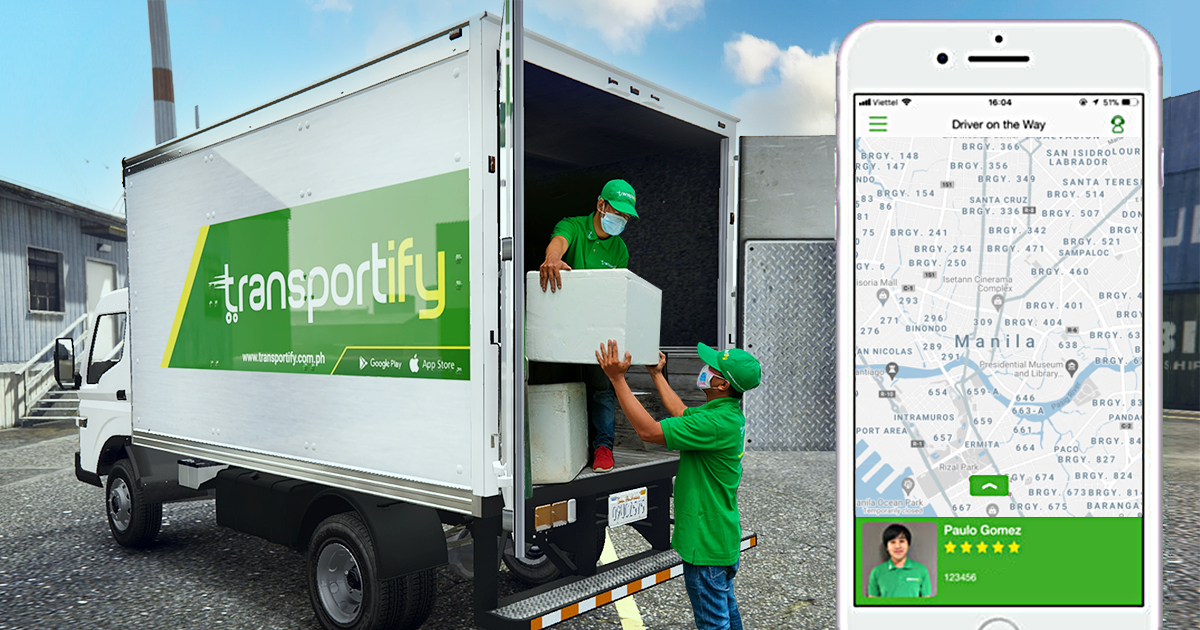
Full truck load (FTL) is a road freight shipping method where a single shipper’s cargo occupies an entire truck for direct-route trip. FTL logistics moves directly from pickup to delivery without intermediate stops. FTL shipping is characterized by single-shipment exclusivity, full capacity reservation and direct delivery. Single-shipment exclusivity means the truck carries only one shipper’s cargo for the entire journey with no co-loading from other customers. Full capacity reservation means the shipper pays for and reserves the entire truck regardless of whether the load fills the full cargo volume. Direct delivery reduces transit time by removing intermediate stops and consolidation terminal transfers.
Philippine supply chains utilize FTL transport to distribute high-value commercial goods across regional logistics networks. FTL transport allows logistics managers to secure the cargo doors with a tamper-evident seal at the origin facility. The tamper-evident seal remains unbroken until the vehicle arrives at the final receiving dock. Keeping the truck completely sealed prevents cargo tampering and unauthorized access during long-distance transit.
Transportify provides FTL shipping services across Luzon, Visayas, and Mindanao. Philippine businesses use Transportify’s full truck load service to ship bulk cargo directly to destinations without co-loading. FMCGs, electronics companies, and SMEs book Transportify FTL trucks for direct deliveries across major Philippine trade routes. Shippers get 24/7 live support and real-time GPS tracking on every FTL shipment.
What is Full Truck Load in Logistics?
Full truck load in logistics functions as a dedicated capacity contract between a shipper and a freight carrier that removes all other shippers’ goods from the truck. FTL grants the shipper exclusive commercial rights to the entire trailer space for a designated route. The exclusive commercial rights apply even if the shipper’s goods do not fill the maximum payload limits of the vehicle. Logistics providers categorize this freight model as a closed-loop transport service. A closed-loop transport service guarantees that the carrier cannot legally co-load third-party goods into the trailer at any point during the journey. Full truck load operates differently from less-than-truckload (LTL) shipping. LTL shipping works by consolidating cargo from multiple shippers at a terminal hub and completes multiple stops before completing a delivery. FTL removes the intermediate stops present in LTL shipping.
The operational flow of FTL runs from booking through to final delivery in a continuous, uninterrupted sequence. The shipper books a dedicated truck for a specific date and route. The carrier dispatches the truck to the shipper’s warehouse or factory. The shipper’s cargo loads exclusively onto the truck. The truck then transits directly to the destination without any terminal stops or cargo transfers. Delivery completes at the consignee’s facility in a single unloading event.
What does FTL mean in Trucking?
FTL in trucking stands for Full Truckload. FTL is the standard abbreviation used by carriers, freight brokers, and shippers across the Philippine trucking industry and in global logistics markets. Full Truckload entered widespread use in global logistics through the deregulation era of the 1980s. Carriers began separating full and partial load pricing structures in the 1980s. Philippine logistics providers adopted FTL as the standard acronym through alignment with international freight industry practice. FTL now appears consistently in the Philippines in booking platforms, freight invoices, and logistics contracts nationwide.
Full Truckload terminology carries distinct meanings for the three parties that use it in the supply chain. Carriers use FTL to describe transport assignments where they move one shipper’s exclusive load on a single dedicated run. Philippine trucking companies like Transportify list Full Truckload as a distinct service tier because it commands different rate structures from LTL. FTL rates are based on truck type, route distance, and total load weight rather than per-kilogram or per-pallet pricing. Freight brokers use FTL when matching shippers to carriers on specific routes. Brokers identify Full Truckload loads by truck size and route availability. Philippine brokers source Full Truckload capacity by truck size depending on shipment volume and cargo type. Shippers use FTL when outbound cargo volume, weight, sensitivity, or delivery urgency makes exclusive truck use the most practical option.
Is FTL the same as Full Truckload Shipping?
Yes. FTL is the same as full truckload shipping. FTL is the acronym for full truckload. FTL and full truckload both describe the identical freight service where one shipper’s cargo occupies one dedicated truck traveling a direct route to a delivery point. The service stays identical regardless of which form is used. Only the label changes across markets and providers.
| Term | Used By | Market |
|---|---|---|
| FTL (Full Truckload) | Logistics providers, freight brokers | Global (Standard Acronym) |
| TL (Truckload) | Motor carriers, dispatchers | North American freight markets |
| Dedicated Truckload | Contract carriers, 3PLs | Long-term capacity contracts |
Companies use “FTL” and “full truckload” interchangeably in published service documentation and booking systems in the Philippines. FTL applies exclusively to land-based truck transport. Full container load (FCL) is the sea freight equivalent that reserves a shipping container rather than a truck. FTL and FCL are not interchangeable despite both following an exclusive-use model.
How does Full Truckload Shipping Work?
Full truckload shipping works by assigning one dedicated truck to a single shipper’s cargo, loading the cargo exclusively, directly transporting the cargo, and completing the delivery at the consignee’s location without stops at any intermediate terminal or facility.
- Secure the booking by contacting a logistics provider to reserve a dedicated truck for a confirmed origin address, delivery destination, and pickup date
- Load the cargo exclusively at the shipper’s pick-up
- Transport the load directly from the origin facility to the consignee’s address without intermediate stops
- Complete the delivery at the consignee’s facility by unloading all cargo at destination
The continuous operational flow of FTL allows Philippine shippers to bypass regional consolidation hubs. Bypassing consolidation hubs prevents cross-docking delays when moving freight from industrial zones, such as those in Laguna or Cavite, to various provincial distribution centers. Moving freight without intermediate handling events ensures the cargo remains secure throughout the entire land journey.
What Steps are Involved in FTL Transport?
The steps involved in FTL transport move one dedicated truck from booking through final unloading on a single direct-route delivery. The shipper, carrier, and freight broker each perform defined roles across booking, dispatch, loading, transit, and unloading. The carrier operates the truck and executes the physical movement from origin to destination. The freight broker matches the shipper’s load requirements to an available carrier on the required route and date. Philippine logistics platforms like Transportify handle the broker and carrier functions together on one platform.
- Book the shipment with a carrier or freight broker by submitting the cargo weight, type, pickup address, and delivery destination.
- Confirm the truck availability, truck type, and route coverage with the broker.
- Dispatch the dedicated truck from the carrier’s fleet to the shipper’s origin facility. The carrier responsible for selecting the right truck size and ensuring the driver arrives at the confirmed pickup address on time
- Load the shipper’s cargo exclusively onto the truck at the origin facility,
- Transit directly from the pickup point to the consignee’s address, with the carrier’s driver following the pre-planned route without any intermediate stops.
- Unload the cargo at the delivery destination. The carrier will confirm the receipt and return a signed proof of delivery (POD) to the shipper.
The steps of FTL transport map the complete process from booking through final unloading, assigning each stage to its responsible party.
Can FTL Shipments be Tracked in Real Time?
Yes. FTL shipments can be tracked in real time through GPS telematics systems installed in the carrier’s truck. GPS systems give shippers and consignees live visibility of the vehicle’s location, estimated arrival time, and route progress at any point during transit.
Real-time FTL tracking works through a telematics device mounted in the truck that continuously transmits location data to a web-based portal or mobile application accessible to the shipper and consignee. Transportify launched FTL services in the Philippines in 2016 and provides real-time GPS tracking as a standard feature on every booking. GPS telematics transmits the truck’s live position and speed at regular intervals throughout the journey. TMS integration feeds the tracking events directly into the shipper’s logistics software so that shipment status updates automatically without manual input from the carrier.
A well-designed FTL tracking interface routes should show a live map with the truck’s current position, the active shipment stage, a continuously recalculated ETA, and a timestamped event log of every status change from dispatch through delivery.
What Is Transport Management System? (2026)
A transport management system (TMS) is a logistics software platform that plans, executes, and optimizes the movement of freight across carrier networks, routes, and shipment types. TMS platforms manage the full freight lifecycle from order creation through carrier assignment, route planning, shipment execution, and delivery confirmation. A TMS used in FTL automates carrier assignment, confirms pickup routes and times, and tracks the dedicated truck from origin to consignee. Logistics providers, shippers, and 3PL companies use TMS software to reduce manual coordination and maintain real-time visibility across all active FTL shipments.
A transport management system performs three distinct functions in FTL coordination. TMS routing selects the most cost-efficient route for each shipment. TMS tracking receives live GPS data from the truck’s onboard device and updates shipment status automatically at every event point from dispatch through delivery at the consignee’s facility. TMS cost management aggregates freight rate data across carriers and identifies the lowest-cost option that meets the shipper’s delivery requirements. Philippine logistics providers use TMS integration to manage FTL bookings across Luzon, Visayas, and Mindanao from a single operations dashboard. TMS integration gives supply chain teams accurate ETAs for warehouse receiving and inventory planning.
What is FTL Freight?
FTL freight describes the cargo profile and shipment conditions that make full truckload the correct freight classification for a given load. FTL freight classification is determined by load exclusivity A dedicated load assigns the entire truck to one shipper regardless of fill volume. A shared load divides the truck among multiple customers with each paying only for the space their goods occupy. FTL freight suits cargo that requires controlled handling, time-definite delivery, or protection from consolidation terminal touchpoints. Philippine shippers moving high-value electronics, perishable goods, pharmaceutical products, and large retail inventory commonly classify their shipments as FTL because load exclusivity removes the damage and delay risks present in shared-load freight.
How is FTL freight classified? FTL freight is classified by load exclusivity first and shipment size second. Load exclusivity means one shipper’s goods occupy the entire truck from pickup to final delivery, with no co-loading or cargo consolidation at any stage. Shipment size determines whether FTL is the most cost-efficient option. Shippers typically reach the FTL threshold when their cargo volume, weight, or delivery sensitivity makes sharing truck space impractical.
| Freight Classification | Load Ownership | Capacity Used | Shipper Count | Transit Pattern | Best For |
|---|---|---|---|---|---|
| FTL (Full Truckload) | Dedicated | 75 to 100% | 1 shipper | Direct, zero stops | Large volume, fragile, and time-sensitive cargo |
| LTL (Less-than-Truckload) | Shared | 10 to 75% | Multiple | Terminal stops and consolidation | Small shipments and cost-sensitive freight |
FTL and LTL freight differs across load ownership, capacity used, shipper count, transit pattern, and best-fit cargo type. FTL is the only classification where a single shipper controls the entire truck with zero intermediate stops. Transportify provides FTL freight services across Luzon, Visayas, and Mindanao for Philippine businesses shipping high-value, perishable, and bulk cargo on dedicated trucks. Transportify classifies FTL bookings by cargo type and truck configuration and matches each shipment to the right vehicle in its fleet.
What types of Full Truckload Freight exist?
The types of full truckload freight are dry van, refrigerated, flatbed and hazardous materials freight. Each FTL freight is defined by the truck configuration and cargo handling requirements.
- 🚚 Dry van freight: Carries general, non-perishable cargo inside a fully enclosed truck body that protects goods from weather, moisture, and road debris throughout transit. Dry van is the most widely used FTL freight type in the Philippines. Dry van freight covers consumer goods, retail merchandise, packaged food, electronics, and manufactured products.
- ❄️ Refrigerated freight: Moves temperature-sensitive cargo inside a truck fitted with an active refrigeration unit that maintains a controlled internal temperature. Refrigerated FTL covers perishable food, frozen meat, dairy, fresh produce, and pharmaceutical products requiring uninterrupted cold-chain conditions. Philippine food manufacturers, supermarket chains, and pharmaceutical distributors book refrigerated FTL when any temperature deviation during transit risks product spoilage or regulatory non-compliance.
- 🏗️ Flatbed freight: Transports oversized, irregularly shaped, or heavy cargo that does not fit inside an enclosed truck body. FTL flatbed shipments in the Philippines include construction steel, heavy machinery, industrial boilers, and prefabricated building components delivered to infrastructure projects and manufacturing facilities. Philippine flatbed configurations include standard flatbeds for moderate oversized loads and lowbed trailers for heavy equipment requiring lower loading heights to comply with road clearance limits.
- ⚠️ Hazardous materials (HazMat) freight: Carries cargo classified as dangerous goods under Philippine land transport and environmental regulations, including flammable liquids, industrial chemicals, compressed gases, and corrosive materials. Hazardous FTL freight requires specialized truck configurations, certified drivers, and compliance permits from the Land Transportation Franchising and Regulatory Board (LTFRB) and the Department of Environment and Natural Resources (DENR). FTL is the preferred mode for hazardous cargo because dedicated truck access eliminates the co-loading risk of mixing dangerous goods with general freight from other shippers.
The FTL freight types cover the primary cargo classifications used by logistics carriers. Each freight type requires a different truck configuration matched to the physical and regulatory demands of the shipment.
Is FTL Freight Faster than other Shipping Methods?
Yes. FTL freight is faster than LTL and other shipping methods because it travels directly from origin to destination in a single uninterrupted run.
FTL freight’s transit speed advantage comes from its direct-route model. Shared freight methods do not have this speed advantage because they require multiple pickup and drop-off events along the route. LTL freight passes through 1 or more consolidation terminals before the final delivery leg begins. Shared freight models add potential delay at each transfer point. Full truckload is the preferred freight mode for time-sensitive cargo on domestic Philippine routes because of the direct-route structure.
FTL shipments typically complete delivery in 1 to 3 days on intra-Luzon routes and 2 to 4 days on inter-island routes using RORO ferry connections. LTL shipments on equivalent routes take 3 to 7 days because terminal consolidation, cargo sorting, and multiple delivery stops add time at every stage. Air freight delivers in 1 to 2 days but carries a cost per kilogram that makes it impractical for high-volume or heavy cargo on domestic Philippine routes.
What types of Full Truckload Freight exist?
Flatbed trucking is a road freight method that uses an open-deck trailer with no sides or roof to transport oversized, irregularly shaped, or heavy cargo that enclosed truck bodies cannot accommodate. Flatbed trucks serve a defined role in FTL freight by providing dedicated, exclusive-use transport for cargo that requires open-deck loading, crane or forklift access, and tie-down securement rather than standard enclosed loading dock procedures.
- Construction materials: Include structural steel, reinforcing bars, precast concrete panels, and prefabricated building components delivered to infrastructure projects and building sites. Flatbed FTL is the standard freight mode for construction supply chains because the open deck allows crane loading directly onto the trailer without dismantling the cargo.
- Heavy machinery: Covers industrial equipment, generators, compressors, agricultural machinery, and manufacturing plant components that exceed the interior dimensions of enclosed truck bodies. Philippine manufacturing facilities and industrial project sites book flatbed FTL for machinery deliveries because the open deck allows multi-point lifting and positioning that enclosed trailers physically prevent.
- Oversized project cargo: Includes wind turbine components, large-format steel structures, industrial boilers, and infrastructure modules that exceed standard road width or height clearances. Philippine logistics providers handling oversized project cargo use flatbed trailers, which reduce the loading height to keep total cargo clearance within Land Transportation Office (LTO) road permit requirements.
- Pipes, beams, and long-form materials: Cover steel pipes, I-beams, timber, and rolled materials that extend beyond the length of an enclosed truck body. Flatbed FTL secures these loads with bolsters and tie-down straps along the full deck length to keep long-form cargo stable.
Philippine businesses book flatbed trucking for FTL shipments when cargo dimensions, weight, or loading requirements make enclosed truck transport physically impossible. Flatbed FTL removes the size and shape restrictions of enclosed freight and gives construction, manufacturing, and infrastructure supply chains a dedicated road freight option for oversized and heavy cargo.
What is the Difference between FTL and LTL Shipping?
The difference between FTL and LTL shipping is that FTL assigns the entire truck to one shipper for a direct-route delivery while LTL divides the truck among multiple shippers. Each shipper pays only for the portion of cargo space their goods occupy on the shared vehicle.
Full Truckload and less-than-truckload are the main road freight modes for domestic shipping in the Philippines. FTL serves large, time-sensitive, or fragile shipments where exclusive truck access and uninterrupted direct delivery are essential. LTL serves smaller loads where sharing the truck’s capacity with other shippers reduces total freight costs. FTL costs more per trip but less per unit as load volume rises.
| Feature | FTL | LTL |
|---|---|---|
| Load ownership | Entire truck reserved for 1 shipper only | Truck divided among multiple shippers |
| Volume threshold | 10 or more pallet or 4,500 kg minimum | 1 to 10 pallets or under 4,500 kg |
| Transit route | Direct, zero intermediate stops | Multi-stop with terminal consolidation |
| Delivery time | 1 to 3 days intra-Luzon or 2 to 4 days inter-island | 3 to 7 days intra-Luzon or 4 to 8 days inter-island |
| Cargo handling | 2 touchpoints at origin loading and destination unloading | 6 to 8 touchpoints across terminal transfers, sorting, and reloading |
| Use case | Bulk orders, exclusive-use, high-value cargo, cold chain, FMCG distribution, just-in-time delivery | Smaller loads, cost-sensitive shipments, flexible non-time-sensitive schedules |
| Cost structure | Flat rate per truck booking (per-unit cost falls as load volume rises) | Per-kg or per-pallet rate (per-unit cost stays consistent at low volumes) |
FTL and LTL freight serve different shipment profiles. FTL suits bulk, time-sensitive, and exclusive-use cargo where a flat truck booking rate becomes cheaper per unit as load volume rises. LTL suits smaller, cost-sensitive shipments where sharing truck capacity with other shippers reduces the total freight cost.
What is LTL meaning and how does it Compare to FTL?
LTL means less-than-truckload. LTL is a road freight mode where a carrier consolidates cargo from multiple shippers onto one truck and charges each shipper only for the portion of truck space their goods occupy. LTL shipping handles freight that is too large for parcel couriers but too small to justify booking a dedicated truck. Less-than-truckload shipping operates through a consolidation model that separates it from FTL at every stage of the journey. The carrier collects small loads from multiple shippers at a central terminal, sorts the combined cargo by destination zone, and routes outbound trucks to regional hubs or final delivery areas. Philippine LTL carriers including Transportify’s shared freight service follow this multi-stop consolidation process on domestic routes.
LTL shipping costs less than FTL for low-volume loads because the truck’s total operating cost is split among multiple shippers. A Philippine business shipping 4 pallets of consumer goods from Manila to Cebu pays a fraction of what a 10-wheeler wing van costs, because the remaining truck space gets sold to other shippers traveling the same route. The trade-off is delivery time. LTL takes 3 to 7 days on intra-Luzon routes because cargo is not directly delivered. FTL completes the same routes in 1 to 3 days because the truck travels directly from origin to consignee without stops.
Is FTL more Cost Effective than LTL?
Yes. FTL is more cost effective than LTL when shipments exceed 10 pallets or 4,500 kilograms on Philippine routes,. FTL is more cost effective because cost per unit falls as load volume grows on a fixed flat-rate truck booking. LTL remains more cost effective for loads under 10 pallets, where the per-pallet charge is lower than dividing an entire truck booking across fewer items.
FTL cost-per-unit efficiency depends on how much of the truck’s carrying capacity the shipper fills. A 10-wheeler wing van that carries its maximum payload divides the flat booking rate across every kilogram loaded. LTL pricing increases with every additional pallet or kilogram added to the booking because the carrier charges a separate rate for every unit of space used. The cost-effectiveness advantage of LTL disappears above 12 pallets. The combined LTL bill often equals or exceeds the flat FTL rate while delivering slower transit and more cargo handling touchpoints.
| Cost Factor | FTL (10-Wheeler Wing Van, Exclusive) | LTL (Shared Load, Consolidated Carrier) |
|---|---|---|
| Base freight cost | PHP 22,000 to 28,000 flat rate | PHP 1,900 to 2,400 per pallet |
| Terminal and handling fees | None | PHP 1,500 to 3,000 |
| Total estimated cost | PHP 22,000 to 28,000 | PHP 24,300 to 31,800 |
| Cost per pallet | PHP 1,800 to 2,300 | PHP 2,025 to 2,650 |
| Estimated transit time | 2 to 3 days | 4 to 6 days |
| Cargo handling touchpoints | 2 events | 6 to 8 events |
| Outcome | Lower cost per pallet, faster delivery, fewer handling events | Higher total cost, longer transit, more damage risk |
FTL delivers a lower cost per pallet, faster transit, and fewer cargo handling events than LTL at full load volumes. Philippine shippers moving 12 or more pallets on domestic routes consistently reach a lower total freight cost under FTL than under a shared-load LTL booking on the same corridor.
What is LTL meaning and how does it Compare to FTL?
Less than truckload (LTL) shipping is a road freight mode where a carrier consolidates cargo from multiple shippers onto one truck and charges each shipper only for the portion of truck space their goods occupy. LTL fills the freight gap between parcel delivery and full truckload, handling shipments too large for courier services but too small to justify a dedicated truck. Philippine businesses use less-than-truckload (LTL) shipping to move regular smaller-volume replenishments to regional outlets and retail branches without paying for unused truck capacity on every booking.
How Does LTL Complement FTL in Logistics Strategy? LTL and FTL serve different shipment thresholds within the same logistics network. Philippine businesses assign each outbound load to the mode that matches its volume, urgency, and cost profile. A manufacturer shipping a full production run books FTL for direct delivery at a flat rate. The same manufacturer shipping smaller top-up orders to individual retail branches books LTL to share truck capacity with other shippers on the same route. Running both modes together prevents businesses from overpaying for dedicated trucks on low-volume loads while still protecting time-sensitive cargo under FTL exclusivity. Transportify offers both FTL and LTL services on one platform, so shippers can switch modes by order size without changing carriers.
What is Full Truck Load capacity?
Full truck load capacity is the maximum payload weight and internal cargo volume available for cargo in a single FTL booking. Philippine carriers measure full truck load capacity using three dimensions. The first is gross payload weight in kilograms. The second is floor area in square meters. The third is internal cargo volume in cubic meters.
Full Truckload (FTL) capacity starts with the truck’s Gross Vehicle Weight Rating (GVWR). Philippine carriers calculate net payload capacity by subtracting the truck’s curb weight from its GVWR.
Payload Capacity (kg) = GVWR − Curb Weight
Volume capacity measures how many pallets the truck’s floor area can hold based on the standard pallet footprint. Volume capacity in terms of maximum pallet count is given by dividing the total floor area by the pallet footprint.
Maximum Pallet Count = Available Floor Area (sq.m) / Pallet Footprint (sq.m)
Capacity utilization measures how efficiently the shipper fills the truck’s available weight and volume. Philippine logistics managers target 80% or higher utilization to maximize FTL cost efficiency on every booking. The utilization rate is calculated by dividing the actual cargo weight or volume by the maximum payload weight or volume.
Capacity Utilization (%) = Actual Cargo Weight or Volume / Maximum Cargo Weight or Volume
A shipper loading 14,400 kilograms onto an 18,000-kilogram wing van achieves 80% weight utilization, which is the standard efficiency benchmark used by Philippine logistics managers when evaluating full truckload cost performance. FTL effective capacity is capped by whichever threshold the cargo reaches first, whether that is the payload weight limit or the available floor volume, and optimizing against both simultaneously is what separates efficient FTL planning from underloaded bookings.
What Factors Affect FTL Capacity Utilization?
The primary factors that affect FTL capacity utilization are cargo type, packaging method, trailer size and weight limits. The factors that determine how efficiently a shipper fills the available weight and volume on a full truckload booking are listed below.
- Cargo type determines how densely goods pack into the truck’s available floor space and cubic volume. Dense cargo like steel parts and bottled beverages pushes weight utilization toward the payload limit before the floor fills completely. Light, bulky cargo like foam products and textile rolls fills the floor area before reaching the weight limit.
- Packaging method controls how much floor space and vertical height each cargo unit occupies inside the truck body. Palletized cargo with uniform dimensions stacks predictably and maximizes floor coverage. Irregular or unpalletized cargo creates floor gaps that reduce usable area and prevents stacking in most configurations.
- Trailer size sets the fixed upper limit on how much cargo enters the truck regardless of cargo density or packaging format. Philippine FTL trucks range from a 6-wheeler closed van with 14 cubic meters of internal volume to a 40-footer articulated wing van with 62 cubic meters. Selecting a truck too large for the actual shipment reduces utilization and raises cost per kilogram.
- Weight limits restrict payload independently from volume. LTO regulations impose per-axle weight limits and GVWR restrictions that all carriers must comply with on public roads. Shippers managing weight-dense cargo must calculate the load against both the truck’s rated payload capacity and LTO road weight regulations to avoid overloading penalties on national highways.
Effective FTL capacity planning in the Philippines requires matching cargo type, packaging format, and truck size to the actual shipment on every booking.
Can FTL Capacity Vary by Truck Type?
Yes. FTL capacity varies significantly by truck type because each truck configuration uses a different chassis, body design, and cargo space that produces a distinct set of weight, volume, and dimensional limits on every full truckload booking.
FTL capacity variance across truck types affects which cargo a shipper can load and how efficiently the load fills the available space. A standard enclosed wing van uses a sealed rectangular body that maximizes internal cubic volume and protects cargo from weather, moisture, and road debris throughout transit. A flatbed truck removes the enclosed body and replaces it with an open deck that allows oversized, irregularly shaped, or tall cargo to extend beyond the truck’s standard width and height limits. Payload capacity rises on flatbed trucks because the absence of the enclosed body reduces curb weight and increases the available cargo payload. A refrigerated truck uses an insulated body and an active refrigeration unit mounted at the front wall that reduces internal cubic volume by 5 to 8% compared to a dry van of the same external length.
| Cost Factor | FTL (10-Wheeler Wing Van, Exclusive) | LTL (Shared Load, Consolidated Carrier) |
|---|---|---|
| Base freight cost | PHP 22,000 to 28,000 flat rate | PHP 1,900 to 2,400 per pallet |
| Terminal and handling fees | None | PHP 1,500 to 3,000 |
| Total estimated cost | PHP 22,000 to 28,000 | PHP 24,300 to 31,800 |
| Cost per pallet | PHP 1,800 to 2,300 | PHP 2,025 to 2,650 |
| Estimated transit time | 2 to 3 days | 4 to 6 days |
| Cargo handling touchpoints | 2 events | 6 to 8 events |
| Outcome | Lower cost per pallet, faster delivery, fewer handling events | Higher total cost, longer transit, more damage risk |
Philippine shippers match truck type to cargo based on temperature requirements, dimensional profile, and weight-to-volume ratio. Payload ranges from 4,000 to 20,000 kilograms depending on truck size and configuration. Volume capacity ranges from 13 to 62 cubic meters across the full fleet.
What are the advantages of FTL trucking?
The advantages of FTL trucking are speed, reduced cargo handling, lower damage risk, and direct routing. Each advantage addresses a specific inefficiency that shared-load freight methods introduce at consolidation terminals, multi-stop routes, and cargo transfer events.
- Speed: Delivers FTL shipments from origin to consignee faster than any shared-load road freight method. The truck travels a direct, uninterrupted route without stopping intermediate stops. A 10-wheeler wing van leaving a Laguna distribution center reaches a Cebu City consignee in 2 to 3 days on the RORO route, while the same cargo on an LTL truck takes 4 to 6 days.
- Reduced handling: Replaces the 6 to 8 cargo transfer events in LTL freight with just origin loading and destination unloading zones. FTL cargo loads once at the shipper’s facility and unloads once at the consignee’s facility. No third party repositions the pallets or stacks other shippers’ freight against the load during transit.
- Lower damage risk: Keeps the entire truck reserved for one shipper’s goods from pickup through delivery. FTL shipments produce fewer damage claims than LTL shipments on equivalent Philippine routes.
- Direct routing: Gives the truck one origin address, one destination address, and one unbroken route between them. LTL freight waits at the terminal until the carrier consolidates enough cargo to fill the outbound truck. FTL freight bypasses the consolidation queue entirely. FTL gives the shipper full control over pickup time and delivery date.
The advantages of FTL trucking give an operational edge over shared-load freight modes for large, urgent, or sensitive cargo on Philippine domestic routes. Each advantage reduces a specific cost, delay, or risk that consolidation-based freight methods cannot eliminate without restructuring the multi-shipper model they depend on.
| 💼 Business Value & ROI Impact FTL’s advantages convert directly into measurable cost reductions. Faster transit cuts stock-out losses for retail chains restocking provincial stores. Fewer handling events reduce damage claim frequency. Direct routing eliminates terminal delay costs that inflate lead times on time-sensitive orders. For high-volume Philippine shippers, the per-shipment premium of FTL over LTL is consistently offset by lower product loss, fewer failed deliveries, and more predictable inventory replenishment cycles. |
Why do businesses choose Full Truckload Freight?
Businesses choose full truckload freight when shipment volume, delivery urgency, or product sensitivity makes exclusive truck access more rational than sharing space with other shippers. Volume becomes the deciding factor when weekly outbound movement consistently fills 75% or more of a truck, reaching the cost crossover point where FTL costs the same or less per pallet than LTL. Urgency applies when delivery timelines cannot absorb multi-day terminal delays. Product sensitivity applies when cargo requires protection from the handling risks that shared-load consolidation introduces.
Philippine retail chains restocking Visayas or Mindanao warehouses from Laguna hubs book FTL because weekly restock volume consistently fills a 10-wheeler wing van. Manufacturing companies in PEZA zones use FTL to move raw materials and finished goods on tight production windows where a 2-day LTL delay causes line stoppages. FMCG distributors book FTL for promotional goods that must arrive before a campaign launch date. Pharmaceutical and electronics shippers default to FTL because the consolidation environment of shared freight poses unacceptable risk to product integrity and regulatory compliance.
Is FTL Safer for Fragile Goods?
Yes. FTL is safer for fragile goods because the truck carries only one shipper’s cargo from pickup to delivery. Total cargo handling is limited to direct loading at pick-up and unloading at destination. Co-loading, terminal restacking, and multi-stop transfers are eliminated entirely. Multiple stops make fragile goods more vulnerable to damage. Transportify explicitly recommends FTL for glass products, electronics, artwork, and medical devices on all Philippine domestic routes. Damage prevention in FTL results from three structural factors. Single-shipper exclusivity means no foreign cargo, unstable co-loads, or incompatible goods share the truck body. Packing control gives the shipper’s team full authority over how cargo is positioned and secured at loading. Route directness replaces multi-stop urban delivery with a single uninterrupted highway transit from origin to destination.
| Safety Factor | FTL | LTL |
|---|---|---|
| Total handling events | 2 events | 6 to 8 events |
| Cargo touchpoints | Shipper-controlled only | Multiple parties |
| Co-loading risk | None. Single shipper cargo only | High. Cargo mixes at consolidation terminal |
| Terminal exposure | None. Direct origin-to-destination routing | 1 to 2 consolidation terminals |
| Damage risk level | Low. Single sealed load, no repositioning | Moderate to High. Increases per transfer event |
FTL cuts fragile cargo handling from 6 to 8 events down to 2. Philippine businesses shipping high-value and damage-sensitive goods use this model to eliminate consolidation terminal exposure on every domestic route.
What is Shipping Insurance in FTL Logistics?
Shipping insurance in FTL logistics is a financial protection policy that covers the declared value of cargo against loss, theft, physical damage, and non-delivery. Shipping insurance gives the shipper direct control over the coverage value and the claims process. FTL shipments carry higher declared cargo values per booking than LTL because the entire truck is dedicated to one shipper’s goods. A single FTL booking of electronics, pharmaceutical products, or fast-moving consumer goods can carry cargo worth millions of pesos. Shipping insurance protects that full declared value rather than the carrier’s limited liability ceiling. Transportify’s FTL service for business accounts includes up to PHP 6 million in cargo coverage through OONA Insurance on eligible bookings.
Philippine shippers choose between several commercial coverage structures based on their cargo risk profile. All-risk insurance provides the broadest coverage by protecting cargo against all transit loss events except those explicitly excluded in the policy. Named perils insurance offers a lower premium by covering only specific risks explicitly listed in the contract, such as fire or theft. Inland marine policies specifically cover goods transported overland by truck and temporarily stored at third-party warehouses. Total loss only coverage applies strictly when the entire truckload is destroyed or lost, excluding partial damage claims.
Filing a shipping insurance claim on a Philippine FTL route follows a strict documentation sequence. The shipper inspects the cargo upon delivery and documents all visible damage with photographs before signing the POD. The signed POD must be submitted alongside the Bill of Lading, commercial invoice, packing list, and repair estimates. The completed documentation must be filed within the policy’s specified timeframe to prevent automatic claim denial.
When Should a Business use FTL Transport?
A business should use FTL transport when shipment volume, delivery urgency, or cargo sensitivity crosses the threshold where exclusive truck access becomes more efficient than shared-load freight. The volume threshold falls between 10 and 12 pallets on Philippine domestic routes. The flat FTL booking rate equals or beats the combined LTL per-pallet cost and delivers 2 to 4 days faster at the volume threshold. Time-sensitive shipments cross the threshold when a fixed delivery window cannot absorb terminal delays. Just-in-time manufacturing schedules and contractual delivery commitments fall into this category because a missed window carries a financial penalty that exceeds the FTL booking premium. Cargo sensitivity crosses the threshold at any pallet count. Philippine pharmaceutical distributors and cold-chain food shippers book refrigerated FTL at volumes as low as 6 pallets because one damage event or cold-chain break in a consolidation environment costs more than the dedicated truck premium.
Which Industries Rely most on FTL Trucking?
The industries that rely most on FTL trucking are retail, automotive, agriculture, and manufacturing. These four industries account for the largest combined share of FTL demand in the Philippine domestic freight trucking market, valued at USD 18 billion in recent market reports from Ken Research.
- Retail: Generates the highest volume of FTL bookings in the Philippines. Supermarket operators and e-commerce distribution networks run regular high-volume restocking runs from Metro Manila and Laguna logistics hubs to regional warehouses in Cebu and Davao. Philippine retail chains including SM Retail, Robinsons Supermarket, and Puregold move full truckload consignments of packaged food, beverages, and personal care products on fixed replenishment schedules across Luzon-to-Visayas and Luzon-to-Mindanao RORO routes.
- Automotive: Depends on FTL for just-in-time parts delivery and finished vehicle distribution across Philippine industrial zones. Assembly operations in Laguna, Batangas, and Clark Free Port Zone book FTL for inbound component deliveries from port warehouses where a single day of delayed parts causes production line stoppages. Finished vehicle transport uses specialized flatbed car-carrier FTL configurations that move 4 to 8 assembled vehicles per truck from assembly plants to regional dealerships.
- Agriculture: Uses FTL to move fresh crops, bagged grain, and harvested produce from farm regions to processing plants and food distribution centers. Philippine agricultural producers in Benguet, Bukidnon, and South Cotabato book refrigerated FTL for fresh vegetables and fruit requiring uninterrupted cold-chain transit from highland farms to Metro Manila wholesale markets. Bagged fertilizer and farming equipment also move on dry van FTL from port warehouses in Manila and Cebu to provincial agricultural cooperatives.
- Manufacturing: Requires FTL at both ends of the production cycle. PEZA-registered manufacturers in Laguna, Cavite, and Batangas use FTL for raw material movements on tight production timetables where LTL consolidation delays disrupt daily output targets. Philippine food manufacturers, electronics assemblers, and FMCG producers run regular outbound FTL lanes to primary distributors because weekly finished goods volume consistently fills a 10-wheeler wing van.
Supply chain predictability is the common denominator across all four industries. FTL delivers fixed departure windows, direct routing, and cargo exclusivity that no shared-load freight model can match on Philippine domestic routes.
Is FTL Safer for Fragile Goods?
Yes. Small businesses can use FTL shipping effectively when cargo value makes dedicated vehicle access worth the flat booking rate. FTL is not limited to large trucks. Transportify offers dedicated FTL bookings across sedans, MPVs, pick-ups, and closed vans. Small businesses with lower shipment volumes can access FTL’s handling exclusivity and direct routing at a vehicle size and price point that matches their actual cargo.
The primary challenge is the flat booking rate. A vehicle costs the same whether it carries a full load or a partial one. Consolidating smaller orders into one outbound booking drops cost per unit below LTL rates on the same lane. Transportify’s on-demand FTL service allows businesses to book vehicles without long-term volume commitments, so a small business can trial FTL on high-volume weeks and revert to LTL during slower periods. Small businesses should track weekly outbound cargo counts by lane and run a total landed cost comparison that includes terminal fees and damage risk costs before committing to a standing FTL contract.
Which Industries Rely most on FTL Trucking?
The best delivery options for small businesses in 2026 are LTL freight, and FTL transport and courier services. Each delivery option serves a different shipment size, budget, and delivery timeline. Choosing the right mode depends on weekly outbound volume, cargo sensitivity, and whether the destination is local or inter-provincial.
- LTL freight: Used by small businesses that move cargo too large for courier services but cannot fill a dedicated vehicle. The shipper pays only for the space the cargo occupies and shares the truck with other shippers on the same route. LTL is the practical starting point for small businesses building their distribution volume before reaching the FTL cost crossover.
- FTL transport: Use when cargo value justifies dedicated vehicle access. Transportify offers FTL across sedans, MPVs, pick-ups, closed vans, and wing vans, which means small businesses can access FTL’s direct routing and handling exclusivity without waiting until they fill a full-size truck. FTL is the natural next step for a small business whose LTL shipments are growing consistently week on week.
- Courier services: Handle small, lightweight, and individual parcel deliveries. Courier services suits small businesses shipping single orders directly to end customers on Lazada, Shopee, or Facebook Marketplace. Courier services are cost-effective at low volumes but become expensive per kilogram as shipment size increases.
Small businesses typically start with courier services and shift to LTL as order volumes grow beyond individual parcel sizes. The best delivery option when weekly volume on a single lane consistently fills a dedicated vehicle is FTL. Transportify’s on-demand LTL and FTL services give small businesses the flexibility to make that transition without long-term volume commitments.
How much does Full Truckload Shipping Cost?
Full truckload shipping in the Philippines costs between PHP 6,500 and PHP 28,000 or more per booking. The final cost depends on route distance, truck type, and cargo requirements. FTL pricing in the Philippines uses a two-part structure consisting of a fixed base rate and a per-kilometer charge on top of the base rate. Transportify’s published rate structure shows a wing van base price of PHP 7,000 in Metro Manila and PHP 6,500 outside Metro Manila and in Visayas and Mindanao. Fuel costs are the largest pricing variable outside the base rate and distance charge. Philippine diesel prices fluctuate with global oil markets and DOE adjustments. Carriers pass those movements to shippers through fuel surcharges that typically add 10% to 20% on top of the base freight bill. Seasonality creates the widest rate variance in the Philippine FTL market. FTL rates on high-demand lanes rise during the Christmas quarter, the back-to-school period, and the agricultural harvest season in Q3 because truck availability tightens as retail replenishment volumes surge. A Laguna-to-Davao wing van that costs PHP 26,000 in June can reach PHP 30,000 to PHP 34,000 in November. Philippine shippers managing seasonal spikes use standing FTL contracts to lock rates before peak demand windows open. Spot market bookings during peak periods consistently cost 15% to 25% more than contracted lane rates for the same route and truck type.
What Factors Influence FTL Shipping Rates?
The factors that influence FTL shipping rates in the Philippines are distance, fuel cost, demand and equipment type. Each factor creates upward or downward price movement independently of the others on any given booking.
- Distance: Drives the base cost of every FTL booking. Carriers calculate route pricing by multiplying the per-kilometer charge by total trip length and adding it to the fixed base rate. The cost per kilometer typically decreases on longer hauls because fixed costs spread across more distance.
- Fuel cost: Adds directly to FTL route rates through carrier-applied fuel surcharges. These surcharges typically represent 10% to 25% of the base freight bill depending on current diesel prices and route length. A PHP 3 to PHP 5 per-liter diesel increase at Philippine DOE-regulated pumps translates to measurable rate adjustments across all domestic corridors.
- Demand: Shifts FTL rates upward when load volume on a lane exceeds available truck capacity. High-demand lanes including Metro Manila to Cebu and Metro Manila to Davao during Q4 retail pre-loading see spot market rates exceed standing contract rates by 15% to 25%. Low-demand backhaul lanes offer discounted FTL rates because carriers prefer a lower-margin load over an empty return trip.
- Equipment type: Sets a rate premium above the dry van base. Refrigerated FTL trucks cost 15% to 30% more than dry van FTL on equivalent routes due to higher fuel consumption and maintenance requirements. Flatbed FTL trucks cost 10% to 20% more than dry van rates because oversized cargo requires LTO route clearance permits and specialized securing equipment.
Philippine shippers who understand these factors can time bookings strategically, negotiate standing contract rates before peak demand windows open, and select the right equipment type to avoid paying a premium that the cargo does not require.
Is FTL Pricing based on Weight or Distance?
FTL pricing in the Philippines is based primarily on distance and route, not on cargo weight. Transportify’s wing van rate structure starts at PHP 7,000 as a base rate and adds PHP 85 per kilometer traveled exceeding 40 kilometers. The per-kilometer charge applies regardless of weight of the cargo.
Weight becomes a pricing factor only when cargo exceeds the truck’s legal payload limit. A shipment within the rated capacity pays the same per-kilometer rate regardless of actual weight. A shipment that exceeds the payload limit requires either a larger truck or an LTO overloading permit which adds cost to the booking.
A Transportify wing van booking from Makati to Laguna covers 55 kilometers. The base rate is PHP 7,000. The route exceeds the 40-kilometer threshold by 15 kilometers. At PHP 85 per kilometer, the distance charge adds PHP 1,275 to the base rate. The estimated total comes to PHP 8,275. That same booking costs PHP 8,275 whether the cargo weighs 3,000 kilograms or 10,000 kilograms, as long as the load stays within the truck’s rated payload capacity.
What are Trucking Quotes Online in the Philippines?
Trucking quotes online in the Philippines are instant freight rate estimates generated through a digital platform where a shipper enters shipment details and receives a calculated price before booking. Online trucking quotes give businesses real-time pricing visibility that supports faster and more accurate FTL booking decisions. Online trucking quote systems work by calculating the route distance, vehicle type, and applicable base rate and per-kilometer charge automatically. The shipper enters the origin, destination, cargo type, and vehicle requirement. The system returns an itemized price based on the carrier’s published rate structure.
Transportify’s online price calculator generates instant quotes across all vehicle types, from sedans and L300 vans to closed vans and wing vans, directly from its website and mobile app. Pricing transparency supports FTL booking decisions by allowing shippers to compare total landed cost across vehicle types and routes before selecting a truck. A shipper can calculate the cost difference between a closed van and a wing van on the same route through trucking quotes online. Shippers who use online quote tools before booking consistently avoid overpaying for oversized vehicles on low-volume loads.







 Chat
Chat